The coaching industry is at a turning point. On one side, coaches are under increasing pressure to scale, working with larger groups, serving global clients, and responding to corporate demand. On the other side, emerging technologies like AI offer powerful ways to streamline operations and deliver insights. But this scale brings an uncomfortable question to the surface:
Can we scale coaching without compromising the trust, privacy, and human connection that coaching is built on?
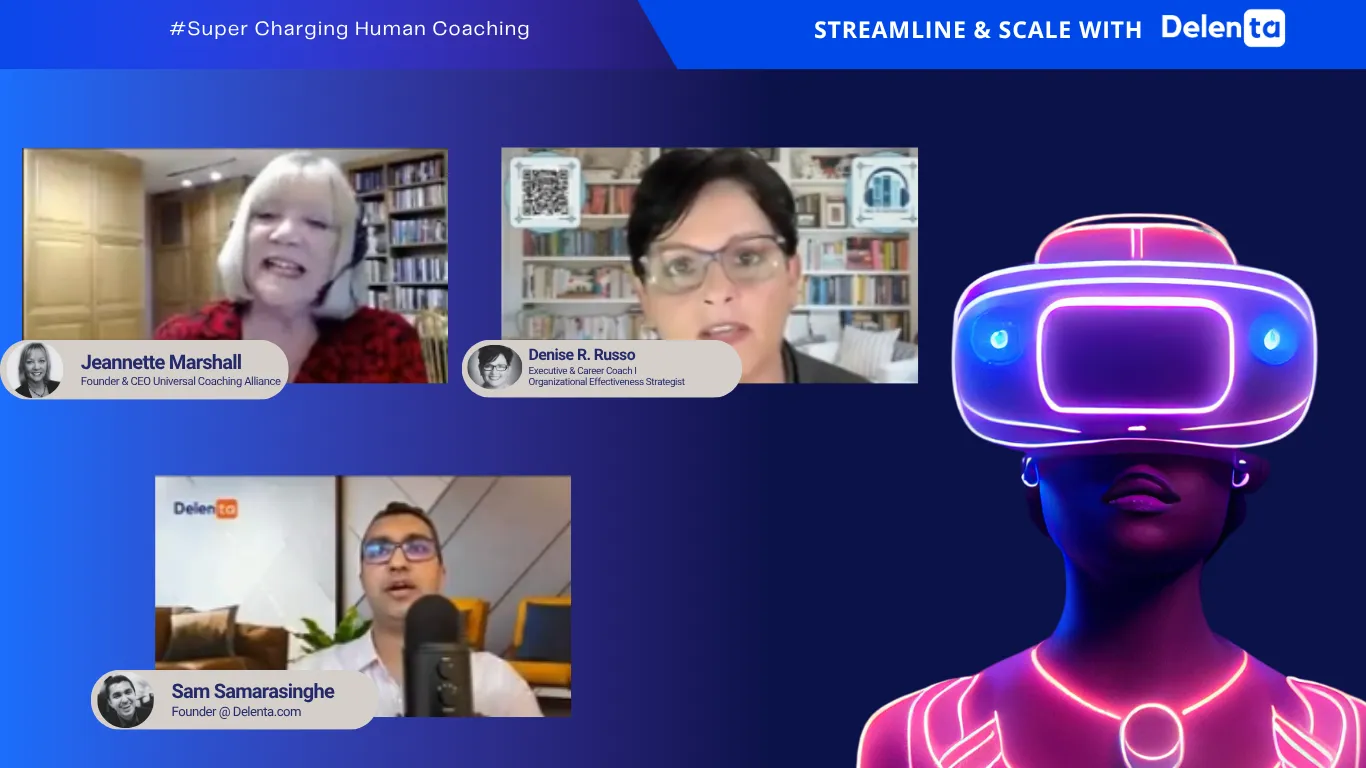
This was the driving theme behind our recent Elevate webinar hosted by Sam Samarasinghe, Founder of Delenta. He was joined by two powerhouse leaders in coaching and corporate development:
- Jeanette Marshall, CEO of Universal Coaching Alliance
- Denise R. Russo, Chief Learning Officer, former SAP global VP, and ICF Board member
Together, they dove into the ethical tensions, opportunities, and responsibilities that come with integrating AI into coaching. Here’s what we learned.
Coaching Is Evolving; But Ethics Must Lead the Way
AI is no longer experimental in the coaching world. From transcription tools and client matching systems to automated reporting and insights, coaches are already using AI to streamline their practices. But as Jeanette reminded us, just because we can use AI doesn’t always mean we should.
In her words:
"There’s a lot of learning and unlearning to be done. For me, it all comes back to the ethical approach. Are we enhancing the human experience or replacing it?"
Jeanette shared an example of testing an AI-powered avatar that mimicked her voice and facial expressions. The tool was impressive, but unsettling. It raised fundamental questions: Would clients know they were interacting with AI? Who would own the data? What if it made mistakes?
Clients Deserve Transparency: Even When It’s Uncomfortable
Trust is the foundation of any coaching relationship. And when AI tools are introduced, whether it’s for note-taking, matching, or progress tracking, clients need to know what’s being used, how it’s stored, and why it matters.
Denise, who has led coaching programs across 75 countries at SAP, emphasized the importance of full disclosure:
“If I’m using a tool to record or summarize a session, I always let the client know. It’s not about instilling fear. It’s about informed choice.”
She explained how AI transcription tools help her stay present especially for clients dealing with stress or emotional challenges. But unless the client gives consent, it doesn’t get used. This standard must become universal.
Data Privacy Is More Than a Legal Obligation: It’s an Ethical One
The conversation took a serious turn when the speakers addressed data privacy and compliance. Coaching is a deeply personal process. If a client shares vulnerable information, and that information is stored or processed by AI, what happens next?
Jeanette warned that many AI platforms today are built on third-party data infrastructure that may not be GDPR compliant. Worse, some may sell user data to advertisers or third-party firms without coach or client awareness. For small coaching businesses trying to scale, that’s a risk they can’t afford.
Sam offered reassurance by walking through Delenta’s own approach. The platform has:
- Achieved ISO 27001:2022 certification, a global cybersecurity standard
- Designed every AI tool to be opt-in, transparent, and secure
- Built features to help coaches respond to RFPs from corporates demanding proof of compliance
AI as an Assistant, Not a Replacement
AI has the potential to empower coaches, not replace them, if used strategically. Denise emphasized this distinction throughout the session.
She shared how tools like AI-powered summaries, visual dashboards, and emotion analysis can help coaches:
- Prepare more effectively between sessions
- Track patterns in client language or tone
- Visualize progress with measurable insights
- Identify unconscious biase in both client and coach
But Denise warned against blind trust. Even sophisticated AI can mislabel data, misinterpret nuance, or make assumptions. Coaches must treat it like a junior partner helpful, but not infallible.
Ethics Begins with Intention, Not Software
The webinar closed with a powerful point: Ethics isn’t just about avoiding harm. It’s about choosing to act in alignment with your values.
Whether you’re a solo practitioner or a large coaching organization, your ethical responsibility starts with asking:
- Why am I using this tool?
- Does it align with my values as a coach?
- Am I transparent with clients about its use?
- Do I understand what’s happening to their data?
- If something goes wrong, am I accountable?
Jeanette summarized it beautifully:
“Ethics begins with intention. It’s not the technology that’s ethical. It’s the people using it.”
Key Takeaways for Coaches Using AI
If you're integrating AI into your coaching practice, keep these principles in mind:
- Be transparent: Always inform clients when and how AI tools are used.
- Get consent: Especially when recording, analyzing, or storing session data.
- Choose ethical platforms: Vet vendors for compliance, data handling, and values.
- Enhance, don’t replace: Use AI to strengthen the coaching relationship, not automate it.
- Lead with intention: Your values should guide your tech choices not the other way around.
Want to Learn More?
Delenta is building AI-powered tools designed specifically for coaches ,secure, human-first, and compliant. From smart note-takers to coach bots that reflect your unique voice and method, we’re here to help you scale responsibly.
What this webinar made clear is that coaches don’t need to fear AI. Instead, we must learn how to work with it, thoughtfully and ethically, to better serve our clients and uphold the integrity of our profession. When we lead with clarity, curiosity, and care, we can create a future where technology empowers coaching not undermines it.
If you're ready to explore how AI can support your coaching practice without compromising your values, book a free demo or start free with Delenta today. Let’s scale coaching, ethically together.