
A professional coaching business should not feel corporate. It should feel considered.
Clients notice whether the next step is clear, whether scheduling is easy, whether information arrives when they need it and whether you remember the context of the relationship. They also notice whether communication sounds like a real person or a template.
The strongest version of professionalism is not polish for its own sake. It is clarity, consistency and care.
Here are five practical ways to make your coaching business feel more professional without losing the human touch that makes coaching work.
What makes a coaching business feel professional?
Professionalism is usually experienced through small moments rather than one big brand decision.
A prospect receives a clear response. A new client knows what to do next. A session is easy to book. A worksheet is easy to find. An invoice does not need chasing. The coach remembers what mattered last time.
None of those moments requires a large team. They require a reliable way of working.
If you want a deeper guide to the full client journey, you can also read How Solo Coaches Can Create a Professional Client Experience Without a Bigger Team.
1. Make the next step obvious
Confusion is one of the quickest ways to make a business feel less established.
At every stage, the client should know what happens next. That might mean a single booking link after an enquiry, a clear onboarding email after payment, or a simple instruction to complete an intake form before the first session.
A useful rule is: one stage, one obvious next action.
For example, instead of sending a new client a long welcome email with seven different links, give them a short sequence:
1. Sign the agreement → 2. Complete the intake form → 3. Book your first session → 4. Access your client portal.
The experience feels professional because the client does not have to work out your process for you.
2. Make routine admin feel effortless
Clients do not need to see how much work happens behind the scenes. They simply need the practical parts of the relationship to work.
Scheduling is a good example. If every appointment requires multiple emails, the admin becomes visible to the client and time-consuming for you.
A structured scheduling system can let clients choose from appropriate availability while you keep control over your calendar and session boundaries.
Explore Delenta’s coaching scheduling tools.
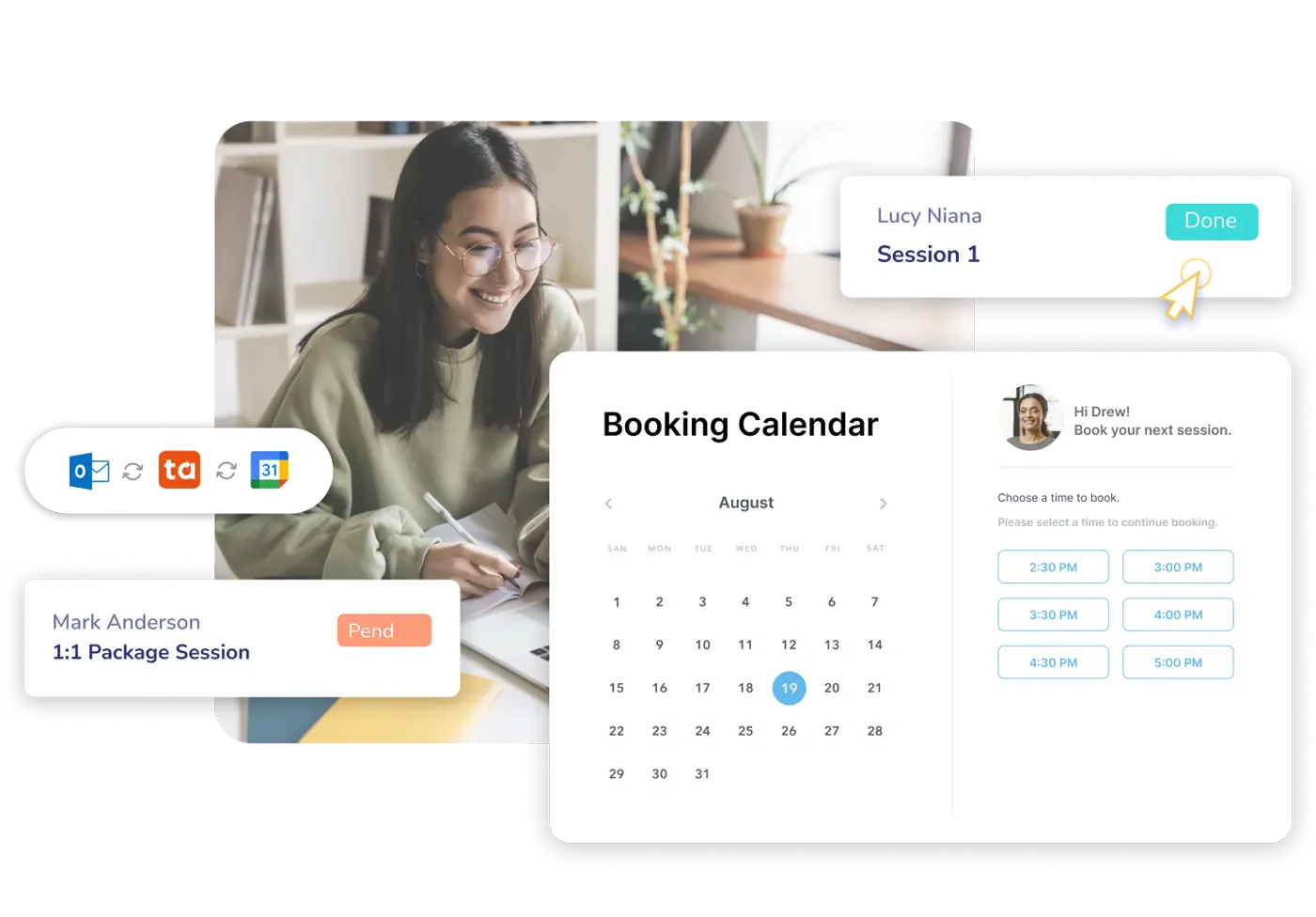
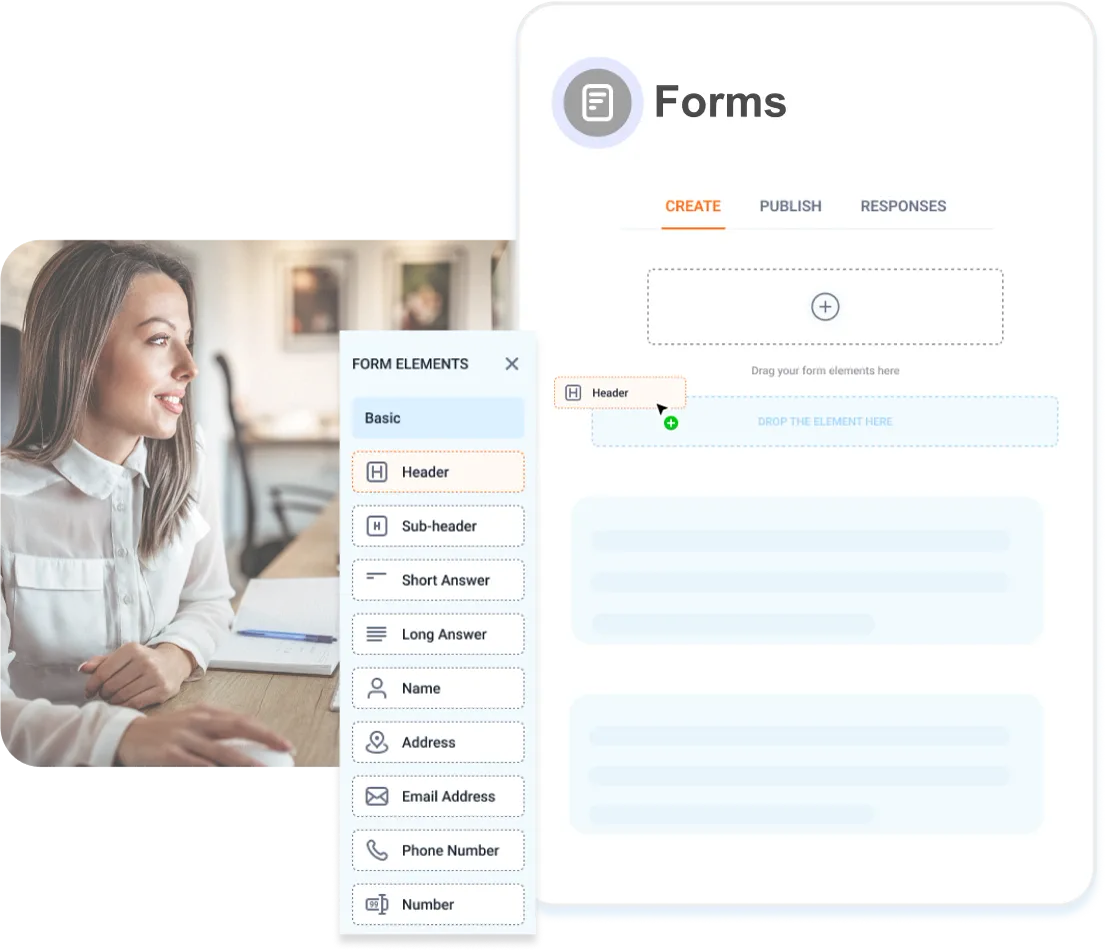
The same principle applies to forms, payments and agreements. A smooth process does not need to feel automated; it simply removes unnecessary friction.
Use coaching forms to collect the information you genuinely need, then keep the first conversation focused on the person rather than paperwork.
3. Give clients one reliable home
Professional service becomes harder to deliver when the relationship is spread across email threads, cloud folders, messaging apps and calendar invites.
Even if you know exactly where everything is, the client may not.
A client portal creates a simple point of return. Clients know where to find session details, resources, goals and other relevant information without repeatedly asking you to resend something.
Delenta’s client portal gives coaching clients a central space for the practical parts of their engagement.
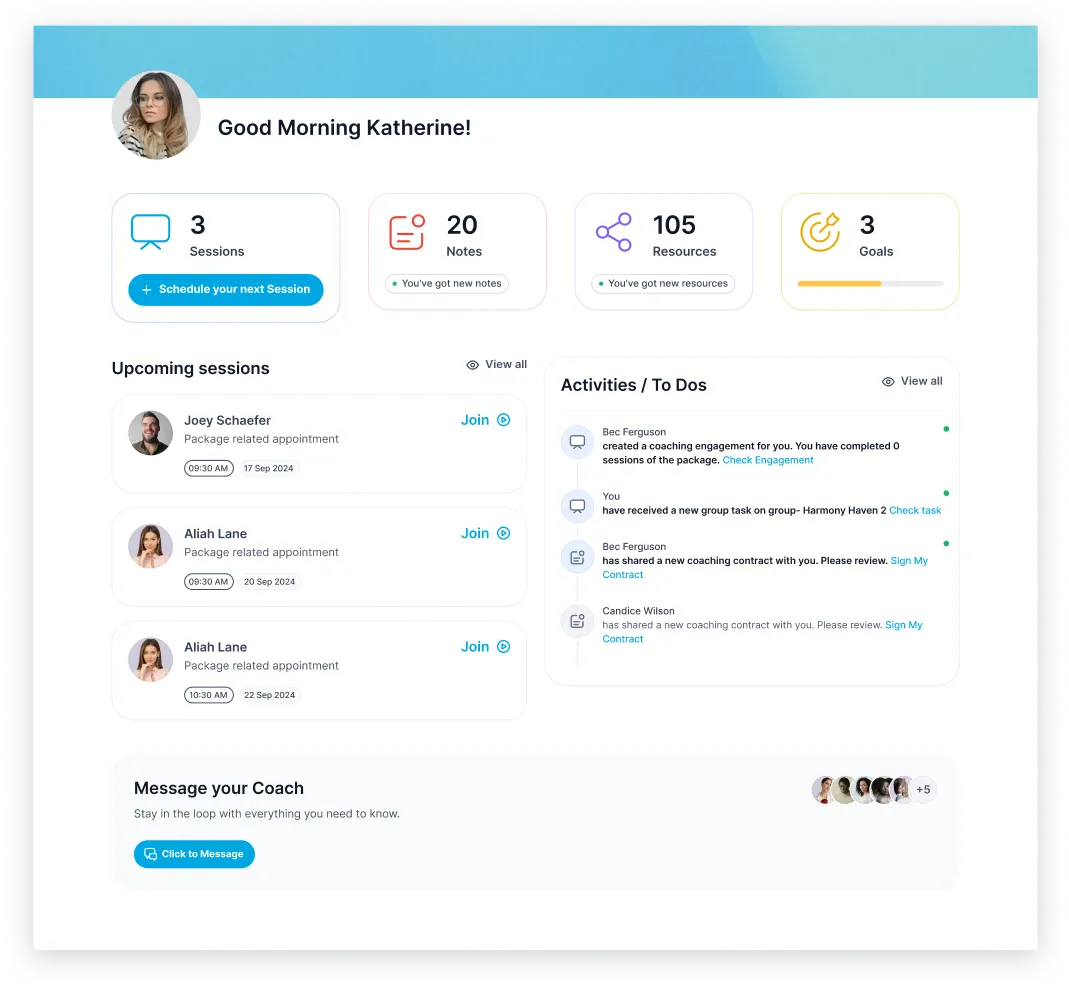
This can actually make the relationship feel more personal because the client spends less time navigating administration and more time engaging with the coaching.
4. Build a consistent follow-through rhythm
A polished first impression matters, but professionalism is tested over time.
Do you remember the action a client committed to three sessions ago? Can you quickly see the goal they are working toward? Does a useful resource reach them when it is relevant, or only when you happen to remember it?
Create a simple follow-through rhythm around every session. For example:
- Before: review the latest notes, goals and relevant context.
- During: stay present rather than trying to manage five administrative tasks.
- After: record the important outcome, action or resource while the conversation is still fresh.
- Between sessions: follow up only where it genuinely adds value.
A coaching CRM can help keep those pieces connected. Explore Delenta’s coaching CRM.
The system provides the consistency. Your judgement decides what deserves attention.
5. Sound like a person, not a workflow
Systems can improve professionalism, but generic communication can undo the effect quickly.
Templates are useful for repeated information such as booking instructions, programme details or payment reminders. They are less useful when the message is supposed to communicate care.
A good approach is to create a clear base message, then add one sentence that only makes sense for that client.
Instead of:
“Thank you for attending your session. Please complete your action items before next time.”
Try:
“Thanks for today. The point you made about delegating without stepping back from accountability felt important. I’ve added the reflection we discussed to your resources for next time.”
The second message may still use a repeatable process behind the scenes. It feels human because the coach adds context.
A before-and-after example
Imagine a solo coach with ten active clients.
Before: enquiries arrive in one inbox, sessions are arranged manually, agreements are emailed as attachments, resources live in folders and client actions are tracked in a notebook. The coach is responsive, but the client experience depends heavily on memory.
After: the coach has a clear booking process, a repeatable onboarding sequence, one client portal and a simple session follow-through routine. Routine reminders happen automatically. Personal messages are still written by the coach when they matter.
The second business does not feel less personal. It feels calmer. The client sees fewer signs of operational effort and more signs of attention.
A 10-minute professionalism audit
Open your website, inbox and client systems and answer these questions as if you were a new client:
- Can I understand what this coach offers?
- Is there one obvious way to take the next step?
- Can I book without unnecessary back-and-forth?
- Do I know what happens after I become a client?
- Can I find the resources and information I need?
- Do emails and messages sound like this coach?
- Are goals and actions carried forward between sessions?
- Does the experience feel organised without feeling rigid?
Fix the point with the most friction first. Professionalism usually improves faster through a few reliable systems than through a complete rebrand.
What not to over-engineer
It is possible to make a coaching business look less human by trying too hard to make it look “professional.”
You probably do not need a twelve-step onboarding sequence, a message for every possible client action or a complicated workflow that takes more time to maintain than it saves.
Use systems where they improve clarity and consistency. Leave space for conversation, discretion and your own voice.
Professional does not mean distant. Structured does not mean scripted.
How Delenta can help
Delenta brings client management, scheduling, calendars, notes, goals, forms, resources, packages, payments, invoicing and client portals into one coaching platform.
That can help solo coaches create a more consistent client experience without assembling the experience manually across multiple tools.
As the business grows, Delenta also supports group coaching and multi-coach teams, so the same operational foundation can develop with the practice.
Final takeaway
You do not need to become more corporate to become more professional.
Make the next step clear. Remove friction from routine admin. Give clients one reliable home. Follow through consistently. Keep your communication unmistakably human.
Those five changes create something more valuable than polish: trust.
Want a more professional client experience without building a bigger admin stack? Start a free trial of Delenta and bring your coaching workflow into one place.