As leaders of multi-coach organizations, we often focus on the transformative impact our coaches can have on clients' lives and careers. However, there's a hidden aspect of coaching that can significantly impact our profitability and effectiveness: administrative tasks.
A recent conversation with William, a veteran coach with decades of experience working a prominent coaching organization, shed light on this often-overlooked challenge that affects not just individual coaches, but the entire coaching ecosystem within a company.
The Administrative Burden
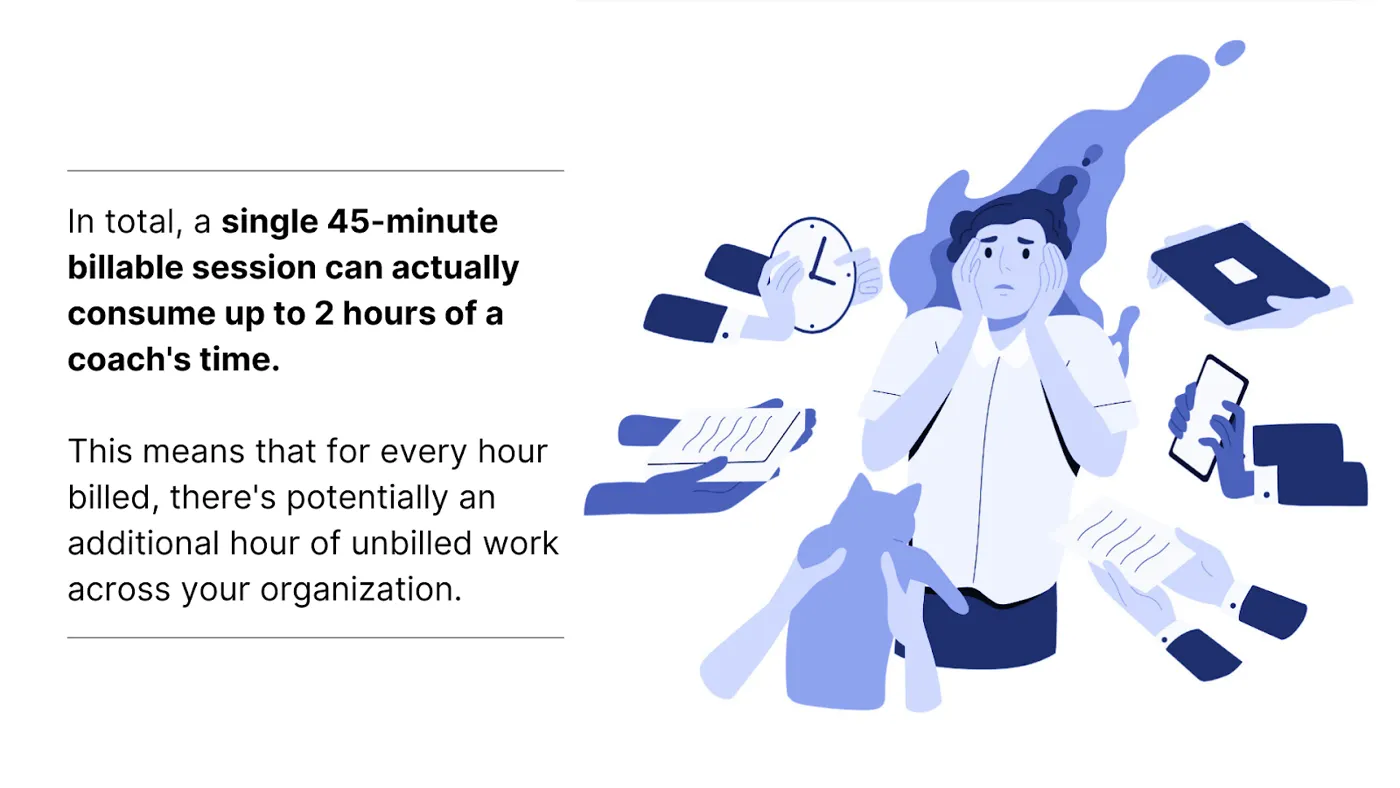
William shared a startling insight: for every 45-minute coaching session, coaches spend an additional 30-45 minutes on administrative tasks. This includes:
- Preparing for the session
- Taking detailed notes
- Tracking client attendance and rescheduling patterns
- Creating follow-up emails and action plans
This administrative overhead not only reduces the time available for actual coaching but also impacts the pricing structure and profitability of the entire coaching organization.
The Time Cost
Let's break down the time investment for a single coaching session:
- 30 minutes of preparation
- 45 minutes for the actual coaching session
- 30-45 minutes for post-session administrative work
The Impact on Profitability
This hidden time cost has significant implications for a multi-coach organization's profitability:
- Reduced Billable Hours: The time spent on administrative tasks could be used for additional coaching sessions, directly impacting potential revenue across all coaches.
- Underpricing Services: Many organizations fail to account for this administrative time when setting rates, effectively undervaluing their services.
- Burnout Risk: The additional workload can lead to coach burnout, potentially affecting the quality of service and long-term sustainability of the coaching practice.
Case Study: Executive Coaching Collective
"The manual coordination between our 12 executive coaches was creating bottlenecks that limited our growth. After streamlining our operations, each coach gained an average of 8.5 hours weekly for client-facing activities. We've been able to increase our average engagement value from $12,000 to $16,500 while serving 28% more clients."
Results achieved:
- 102 hours weekly reclaimed across all coaches
- $4,500 increase in average engagement value
- 28% growth in client volume
- 41% improvement in coach satisfaction scores
Case Study: Multi-Coach Real Estate Training Organization
"We were hemorrhaging money without even knowing it. Paying coaches for sessions that never happened while our manual tracking system failed us completely.
A prominent real estate coaching organization with 18 coaches managing approximately 30 sessions monthly discovered they were systematically overpaying their coaching staff due to lack of session visibility. Before implementing Delenta's comprehensive reporting system, the organization relied on manual Excel tracking and coach self-reporting, creating significant financial exposure.
The Problem:
- Manual session tracking through Excel spreadsheets and coach self-reporting
- No real-time visibility into actual session completion rates
- Administrative chaos when VAs were unavailable, leading to tracking gaps
- Estimated overpayment of $18,000-$24,000 annually due to unverified session claims
Results achieved with Delenta reporting:
- 100% session verification through automated tracking
- $22,000 annual savings from eliminated overpayments
- 95% reduction in payment discrepancies
- Real-time visibility across all 18 coaches and their session activities
Challenges in a Multi-Coach Environment
In a coaching organization with multiple coaches, the administrative burden is amplified.
William highlighted several key issues:
- Lack of Centralized Systems: With coaches bringing their own individual systems like OneNote, Excel, and QuickBooks, there's no centralized repository for client information.
- Difficulty in Client Handovers: If one coach needs to take over another's clients, the lack of standardized note-taking makes it challenging to maintain continuity.
- Inefficient Data Mining: Without a unified system, it's difficult to analyze trends across all clients and coaches to improve the organization's coaching tools and methodologies.
- Inconsistent Client Experience: The use of multiple tools and manual processes can lead to missed appointments & opportunities and an overall disjointed experience for clients.

To address these hidden costs and improve profitability, multi-coach organizations should consider:
- Implementing Integrated Coaching Platforms: Tools like Delenta offer all-in-one solutions for scheduling, note-taking, client management, and billing across the entire organization.
- Automating Repetitive Tasks: Use technology to automate follow-up emails, session reminders, and basic data entry for all coaches.
- Standardizing Processes: Develop standardized intake forms, session notes, and reporting structures to reduce time spent on customization and ensure consistency across coaches.
- Leveraging AI and Transcription Services: Explore using AI-powered transcription services to quickly convert session recordings into written notes for all coaches.
- Reassessing Pricing Structures: Ensure that your organization's pricing accurately reflects the total time investment, including administrative tasks.
The hidden costs of administrative tasks can significantly impact a multi-coach organization's profitability. By recognizing these costs and implementing efficient systems to manage them, organizations can not only improve their bottom line but also free up more time for their coaches to focus on what they do best - coaching and transforming lives.
As William aptly put it, "If you're trying to do quality work and really track this stuff, you have to put some juice into it." By addressing these administrative challenges, coaching organizations can not only improve their profitability but also enhance the quality of service they provide to clients. The key lies in finding efficient systems and processes that can streamline these tasks across the entire coaching team.
Ready to level up your coaching efficiency? Book a 1-on-1 consultation with us to get a complimentary audit of your current workflows and start making your operations work for you, not against you.