The future of coaching may not begin with what a leader says.
It may begin with what everyone else’s nervous systems are doing in response to them.
Imagine the scene.
A senior executive walks into a leadership meeting. Accomplished. Trusted. High-performing. The kind of leader organizations reward.
The meeting becomes tense.
His voice sharpens. He cuts someone off. He dismisses an idea publicly. Someone around the table stops speaking. Another visibly withdraws. The room changes.
But this is where the story becomes very different from every leadership story that came before it.
Several people in the room are wearing smart devices. Apple Watches. Fitbits. Garmins. ŌURA rings.
One wrist vibrates. Then another. Then another.
Elevated heart rate. Stress detection. Autonomic activation. Physiological threat response.
The watches are not reacting to spreadsheets, strategy, or market conditions. They are reacting to leadership.
And for the first time in human history, the biological impact of leadership behavior is becoming measurable in real time.
That changes everything.
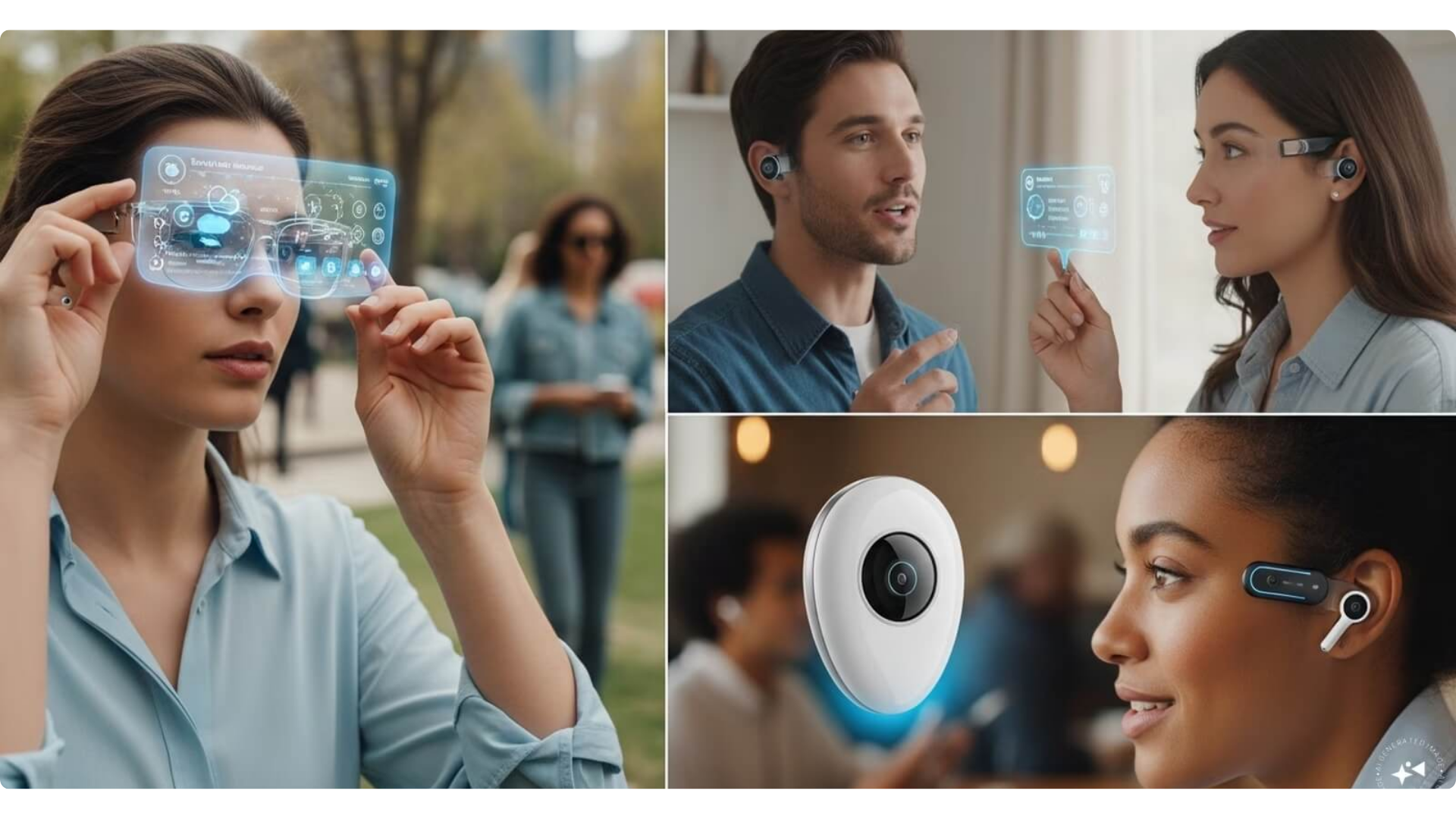
For decades, executive coaching has relied primarily on conversation.
Self-report. Reflection. Assessment tools. 360 feedback. Behavioral observation.
Useful? Absolutely.
But incomplete.
Because human beings are notoriously poor at accurately interpreting their own internal states.

Research from Tasha Eurich famously found that while 95% of people believe they are self-aware, only around 10–15% actually are.
That means most coaching conversations begin with an unreliable narrator.
Now imagine a coaching environment where:
This is not speculative science fiction.
It is already happening.
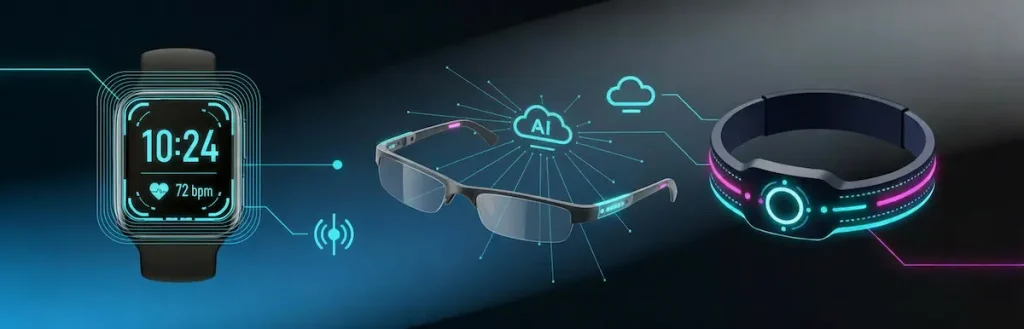
The rise of wearables has quietly created one of the most important new data streams in human development.
Devices that began as fitness trackers are rapidly becoming emotional-state sensors.
The key metric driving this shift is Heart Rate Variability (HRV).
HRV measures the variation in time between heartbeats a surprisingly powerful indicator of nervous-system regulation.
High HRV generally signals resilience, adaptability, emotional regulation, and recovery.
Low HRV is strongly associated with stress activation, fatigue, anxiety, cognitive overload, and burnout risk.
In simple terms:
HRV reveals whether a person’s nervous system is operating from safety or survival.
This matters enormously inside organizations.
Because leadership is not merely psychological.
Leadership is physiological.
A volatile leader does not just damage morale. They dysregulate nervous systems.
And modern wearables are beginning to detect that reality.
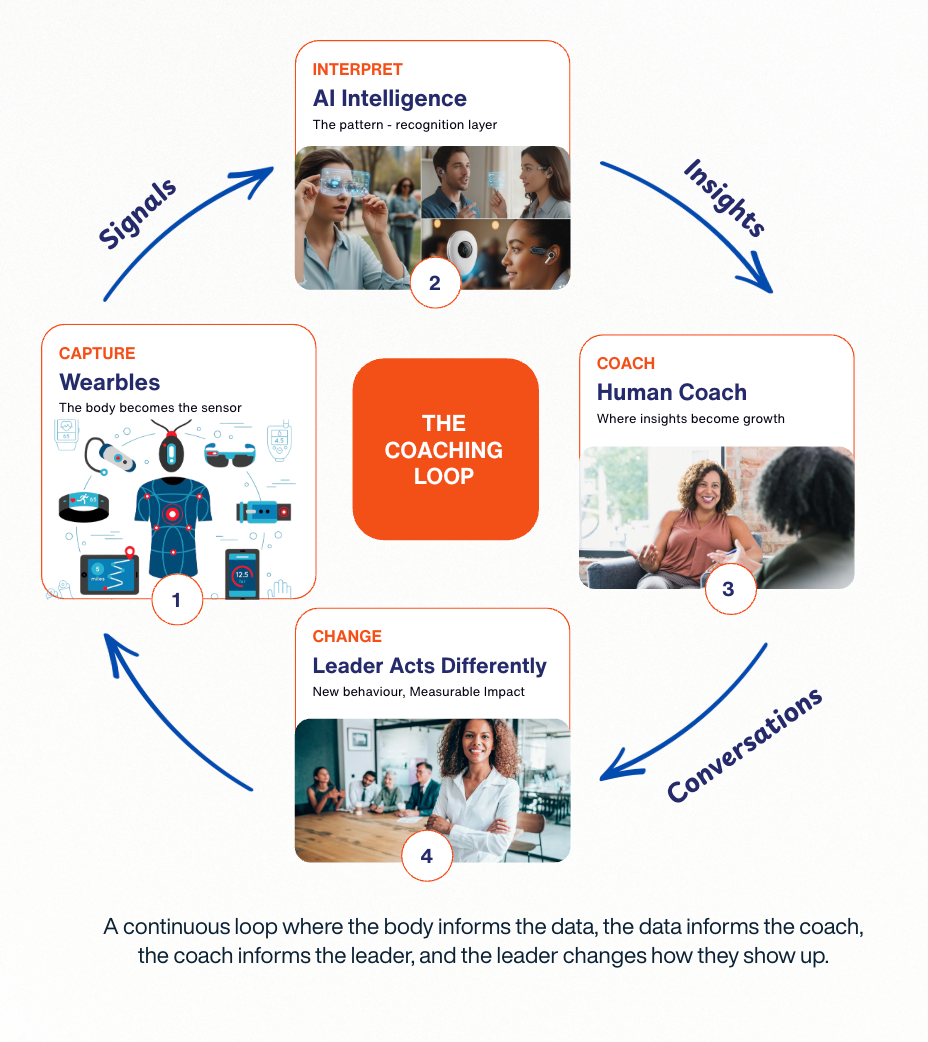
One of the most fascinating developments in neuroscience and organizational psychology is the growing body of research around physiological synchrony.
Human beings do not merely communicate ideas.

We synchronize.
Research now shows that groups unconsciously mirror one another’s:
Studies published across journals including Physiology & Behavior, PNAS, and Scientific Reports demonstrate that emotional contagion and heart-rate synchrony are measurable phenomena.
In practical terms:
When a leader enters fight-or-flight mode, teams often follow.
The implications for executive coaching are profound.
For years, organizations have tried to understand leadership impact through surveys and retrospective feedback.
But surveys are delayed. Biometric data is immediate.
The body often knows before the conscious mind does.
And increasingly, AI can detect those patterns at scale.
The coaching industry is entering the same transformation wave that reshaped finance, healthcare, marketing, and education.
AI is not replacing coaching.
It is redefining what high-performance coaching looks like.
The numbers tell the story:
That gap represents one of the largest strategic opportunities in modern coaching.
Most coaching organizations know technology will become central. Very few are operationally prepared for it.
This is where the next generation of coaching companies will separate themselves.
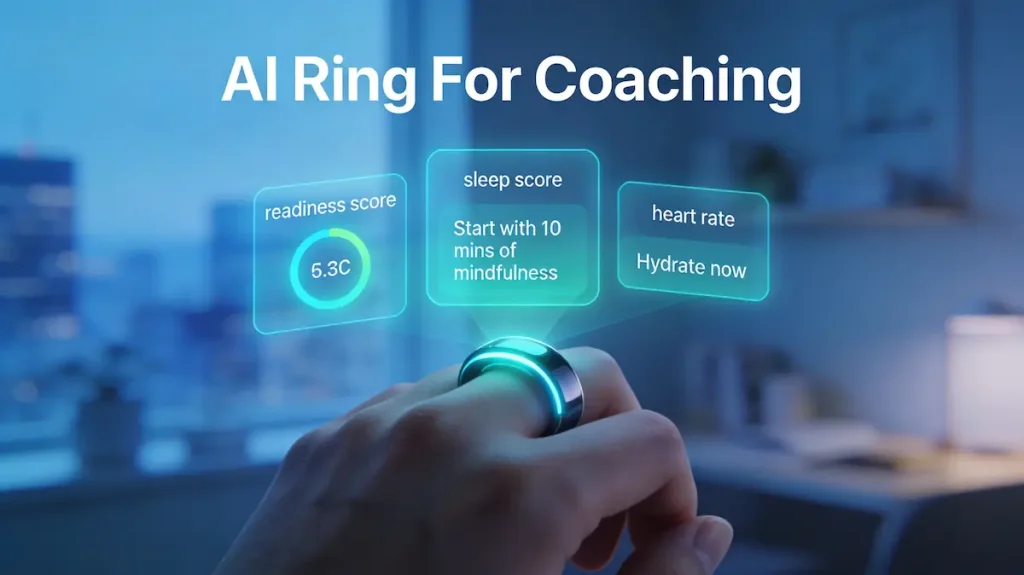
Traditional coaching often begins with a familiar question:
“How was your week?”
But memory is selective. Emotionally biased. Incomplete.
Now imagine this instead:
“Your stress markers spiked dramatically Tuesday at 3:12 PM and remained elevated for four hours. Walk me through what happened.”
That single shift changes the entire coaching dynamic.
The conversation moves from narrative alone to evidence-informed reflection.
Not surveillance. Not judgment.
Awareness.
And awareness is the foundation of transformation.
This is the emergence of what many experts are beginning to describe as intelligent coaching infrastructure.
A coaching ecosystem where:
The technology does not replace the coach.
It deepens the coaching relationship.
What the Most Advanced Coaching Platforms Are Already Doing
The market has already begun moving.
Forward-thinking leadership-development organizations are building systems that combine:
Pulse by Fierce is one of the strongest examples currently operating in the market.
The platform combines wearable HRV data with structured coaching conversations to identify stress patterns and recovery cycles.
Independent validation by the Korn Ferry Institute found:
This matters because executive coaching has historically struggled with one persistent challenge:
Proving measurable ROI.
Biometric-informed coaching may change that permanently.
The Future Belongs to Coaching Organizations That Operationalize Insight
The most successful coaching organizations over the next decade will not simply provide sessions.
They will build integrated human-development ecosystems.
This requires more than coaches.
It requires infrastructure.
The organizations winning this next chapter will combine:
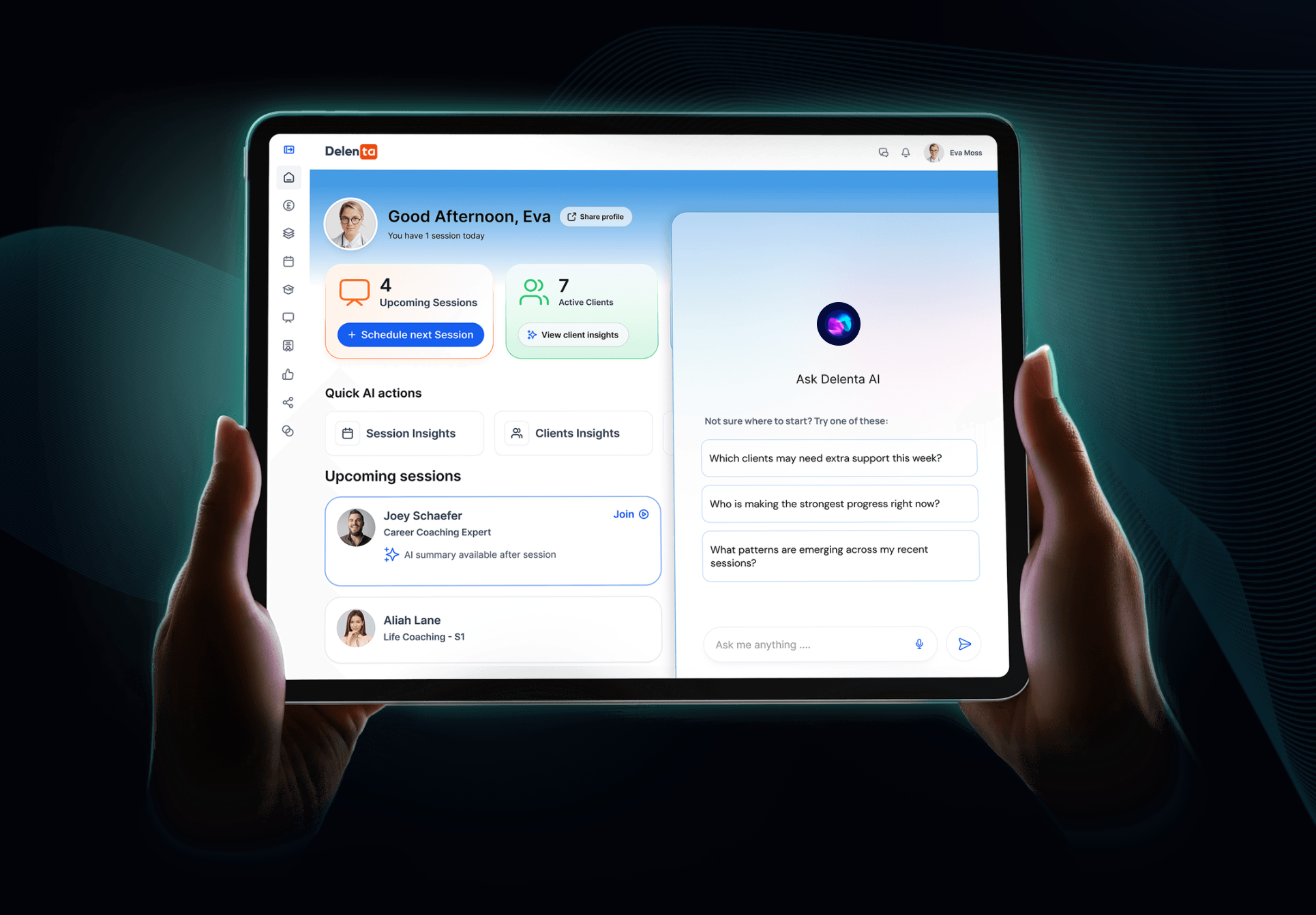
This is precisely why coaching technology platforms are becoming strategically critical.
Modern coaching organizations can no longer scale effectively using fragmented systems, spreadsheets, disconnected scheduling tools, and siloed client notes.
Administrative complexity destroys scalability.
Research consistently shows coaches spend enormous amounts of time managing:
As multi-coach organizations grow, this complexity compounds rapidly.
Without centralized systems:
This is where integrated coaching management platforms become transformational.
Platforms like Delenta are helping coaching organizations operationalize coaching delivery at scale through centralized workflows, white-label experiences, integrated scheduling, client management, analytics, and AI-supported coaching infrastructure.
For coaching firms building enterprise-grade delivery models, operational sophistication is no longer optional.
It is becoming a competitive advantage.
Why Enterprise Organizations Are Paying Attention
This shift is not only relevant for external executive coaching firms.
Internal coaching functions inside large organizations are rapidly becoming strategic.
Why?
Because organizations are facing a convergence of pressures:
Gallup estimates disengagement and burnout cost the global economy trillions annually.
Most organizations still measure culture using lagging indicators.
Annual surveys. Quarterly sentiment reports. Exit interviews.
But wearable and behavioral intelligence systems create the possibility of leading indicators.
Not merely what employees say.
What their nervous systems are consistently experiencing.
That is a dramatically different category of organizational insight.

This future also introduces serious ethical responsibilities.
The distinction between supportive coaching and intrusive surveillance must remain crystal clear.
Biometric data is deeply personal.
Perhaps more personal than words themselves.
Executive coaching organizations adopting these technologies will need strong ethical frameworks around:
The International Coaching Federation has already begun addressing AI ethics formally.
The next major industry conversation will almost certainly center on biometric ethics.
The organizations that lead responsibly here will define trust in the next era of coaching.
It is human.
The deepest implication of AI and wearables in coaching is not efficiency.
It is visibility.
For most of organizational history, the cost of destructive leadership lived invisibly inside human bodies.
Stress. Insomnia. Anxiety. Cognitive exhaustion. Quiet disengagement. Burnout.
Now the signals are becoming measurable.
And once something becomes measurable, it becomes discussable.
Then coachable.
Then transformable.
That may become one of the most important shifts in leadership development this century.
The coaching industry is standing at the edge of a major redesign.
Not because human coaching is disappearing.
But because human coaching is becoming augmented.
The firms that thrive will be the ones that successfully combine:
In many ways, this mirrors what happened in nearly every major industry transformed by digital infrastructure.
The winners were rarely the organizations with the best intentions.
They were the organizations that operationalized insight faster than everyone else.
Executive coaching is now entering that phase.
Final Thought
Return to that meeting room.
The leader raised his voice. The room tightened. The watches vibrated.
For decades, moments like that disappeared into memory.
Now they create data.
Not to shame leaders. Not to monitor humans. Not to mechanize coaching.
But to finally give coaching something it has never fully had before:
A real-time feedback loop between leadership behavior and human impact.
The future of coaching will not belong to AI alone. And it will not belong to human intuition alone.
It will belong to the intelligent integration of both.
And the organizations building that future today may define what leadership development looks like for the next generation.
About the Research Behind This Article
This article was informed by extensive research into AI, wearable technology, biometric intelligence, executive coaching, organizational psychology, leadership development, and coaching technology platforms.
Primary research foundations included:
Choosing a CRM for your coaching business isn't just about managing a contact list; it’s about powering your client’s transformation. While a general CRM focuses on the "Sale," a specialized coaching CRM focuses on the Client Lifecycle, from the first discovery call to the final session and beyond.
The coaching industry is experiencing explosive growth, projected to reach $5.8 billion by 2026 . However, many coaches struggle with administrative overhead, losing an average of 1.25 hours daily on manual tasks like scheduling and invoicing . This guide breaks down the 10 leading platforms to help you decide which engine will power your practice's growth.
Key Takeaways:
A specialized coaching CRM should offer four core pillars: integrated scheduling, automated client onboarding, a secure client portal for resource sharing, and seamless payment processing (Stripe/PayPal). Unlike generic CRMs, coaching-specific tools prioritize the 'coaching journey' over simple sales pipelines