A coaching relationship does not begin when the first paid session starts. It begins when a potential client discovers you, books a discovery call and decides whether they trust you enough to move forward.
It also does not end when the final session finishes. The way you close the engagement, reflect on progress and clarify what comes next is part of the experience too.
That is why it helps to think about the coaching client journey as a complete experience rather than a collection of individual sessions.
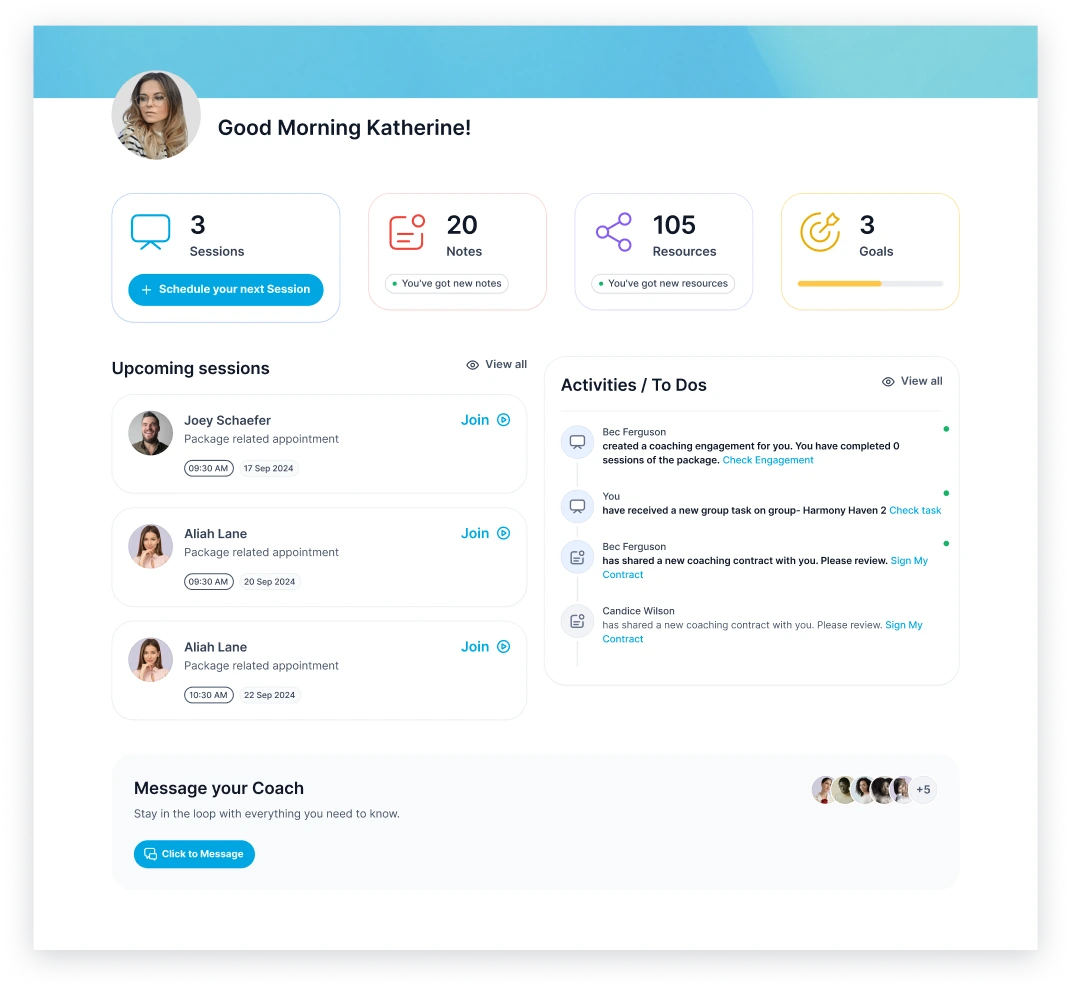
It is the complete experience a client has from discovery through onboarding, coaching sessions, progress reviews and completion.
A discovery call is often treated as a sales conversation. It is better understood as the beginning of the coaching relationship. Make booking easy, explain what the call is for and make the next step clear.
Explore Delenta's coaching scheduling tools
Once someone decides to work with you, avoid a confusing chain of emails and links. Build a simple sequence: Welcome → Agreement/payment → Intake → First session → Coaching.
The goal is not to automate every human interaction. It is to remove unnecessary friction.
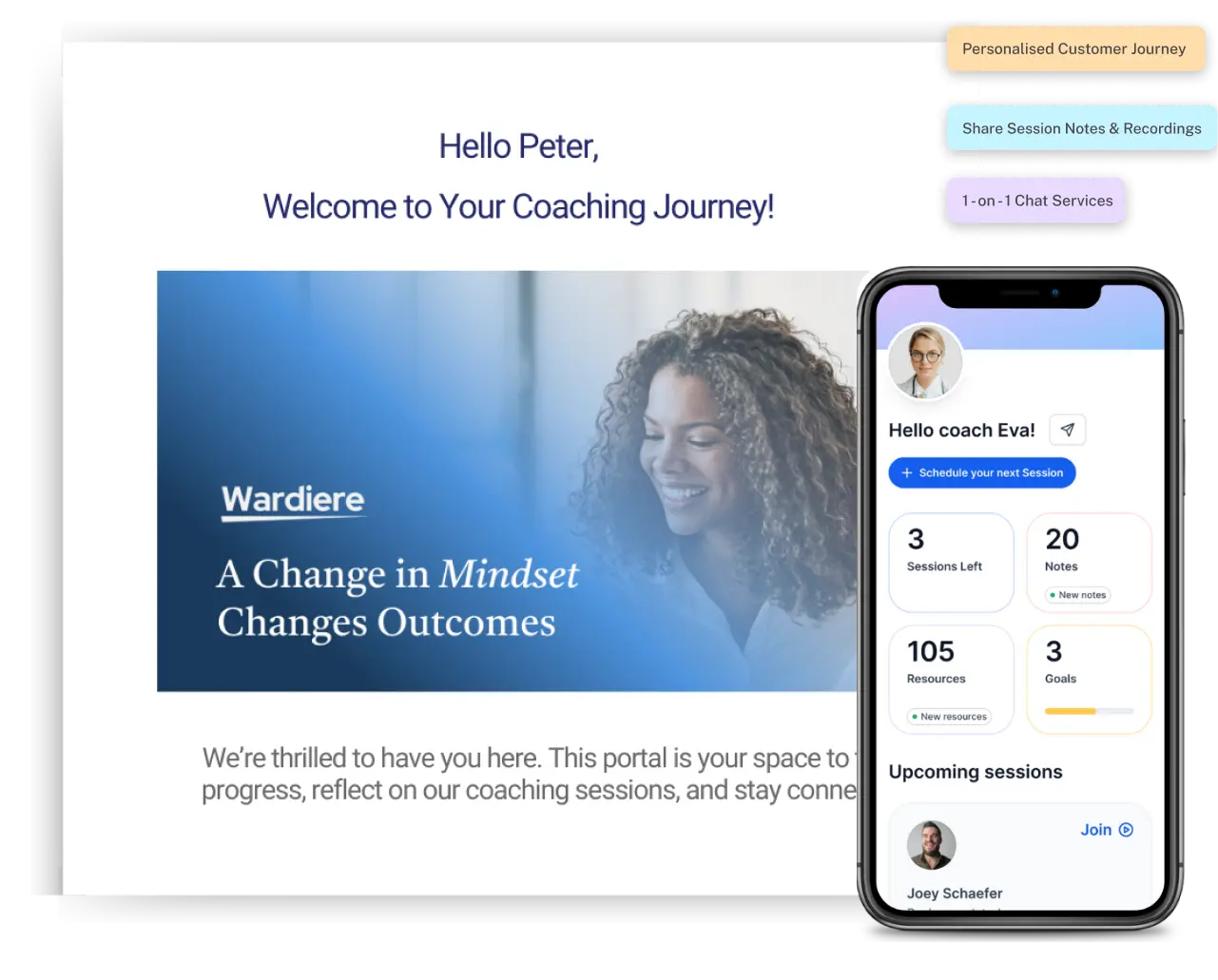
Clients should not have to search their inbox for their next session, a resource, a goal or previous information.
A client portal gives the relationship a clear home. Delenta's client portal brings together sessions, notes, resources, tasks and goals in one client-facing environment.
Explore Delenta's client portal
Every session should connect to the broader engagement. The exact structure depends on your coaching model, but clients should be able to understand how individual conversations contribute to the bigger picture.
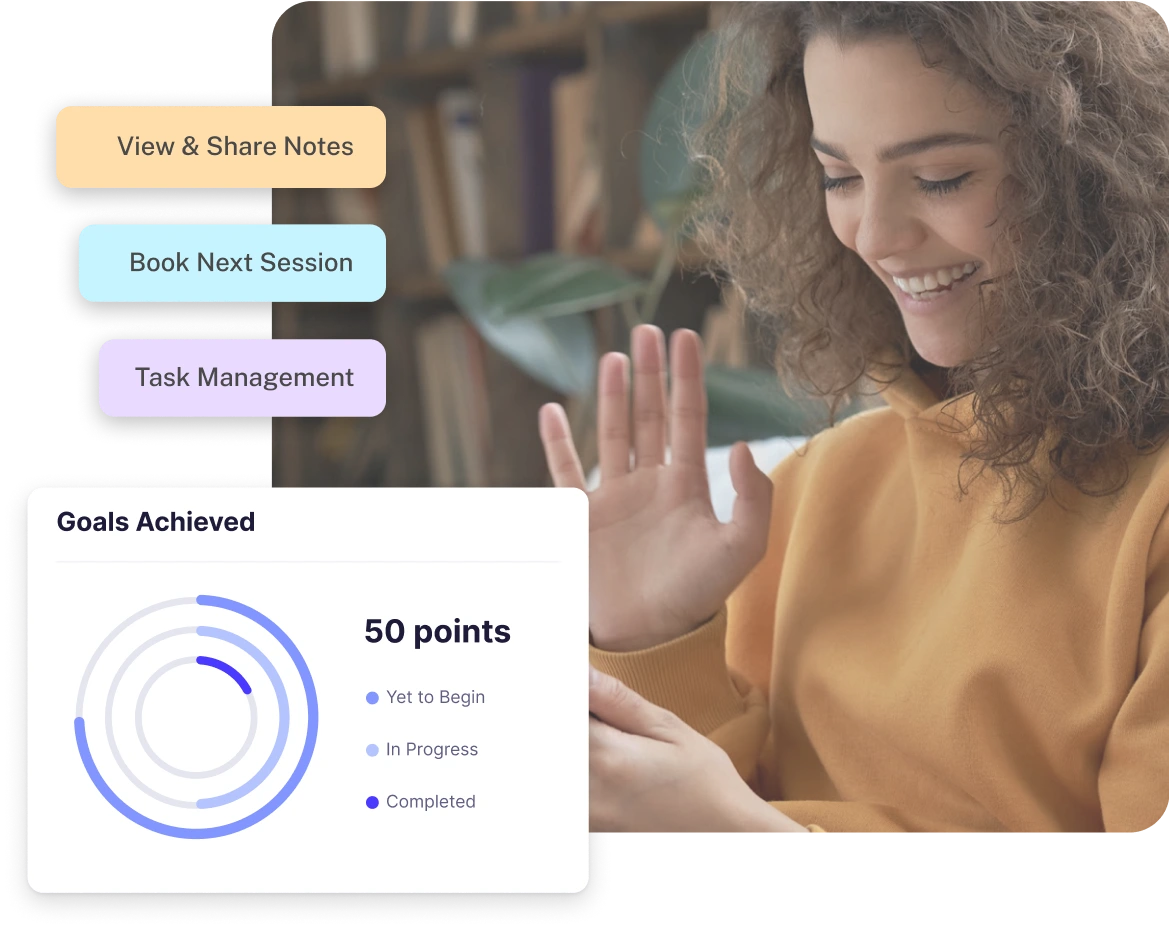
Coaching often continues between sessions through reflection, exercises, actions and accountability. Put those actions somewhere reliable rather than relying on memory or scattered messages.
As client numbers grow, scheduling can become a surprising source of administration. Self-scheduling, calendar synchronization and reminders can remove much of the back-and-forth.
See Delenta's coaching scheduling solution
Do not wait for the final session to ask whether the client is making progress. Create regular moments to ask what has changed, what is still stuck and what deserves attention next.
The final session deserves as much thought as the first. Use it to create reflection and closure.
The final session does not necessarily mean the relationship disappears. With appropriate boundaries, a future check-in, another engagement or useful resources may be appropriate.
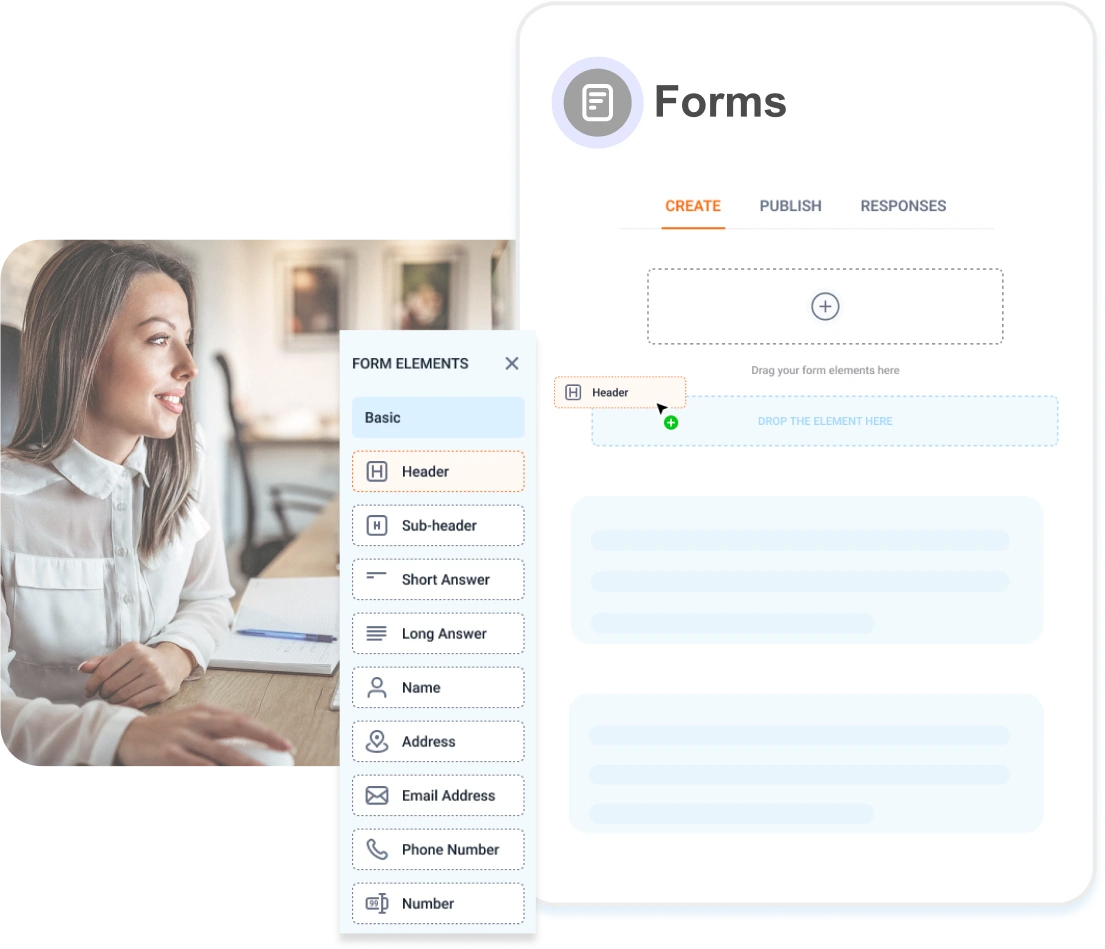
Use technology for repetitive work such as scheduling, reminders, client records, forms, resources and progress tracking. Keep professional judgment and human connection at the centre.
The ICF Code of Ethics also emphasizes clear agreements and maintaining records in a way that promotes confidentiality, security and privacy when technology is used.
Delenta brings together client management, scheduling, sessions, notes, goals, tasks, resources and the client portal, helping coaches manage the operational side of the journey in one environment.
Explore Delenta's coaching CRM
A great coaching client journey is not about creating a complicated process. It is about removing uncertainty. Your client should know what happens next, where to find what they need, what they are working toward and how the engagement comes to a meaningful close.
It is the complete experience a client has from discovery through onboarding, coaching, progress review and completion.
Make the next steps clear. Depending on your process, this may include an agreement, payment, intake and first-session scheduling.
Keep the process simple, explain what happens next, centralize important information and remove unnecessary steps.
Use the final session to review progress, consolidate learning and clarify appropriate next steps.
Ready to create a more connected coaching client journey? Explore Delenta and see how your coaching operations and client experience can work together in one place.
Choosing a CRM for your coaching business isn't just about managing a contact list; it’s about powering your client’s transformation. While a general CRM focuses on the "Sale," a specialized coaching CRM focuses on the Client Lifecycle, from the first discovery call to the final session and beyond.
The coaching industry is experiencing explosive growth, projected to reach $5.8 billion by 2026 . However, many coaches struggle with administrative overhead, losing an average of 1.25 hours daily on manual tasks like scheduling and invoicing . This guide breaks down the 10 leading platforms to help you decide which engine will power your practice's growth.
Key Takeaways:
A specialized coaching CRM should offer four core pillars: integrated scheduling, automated client onboarding, a secure client portal for resource sharing, and seamless payment processing (Stripe/PayPal). Unlike generic CRMs, coaching-specific tools prioritize the 'coaching journey' over simple sales pipelines