Clients do not need coaching to feel more digital. They need it to feel easier to enter, easier to navigate and easier to stay engaged with.
A modern coaching experience combines strong human coaching with clear, low-friction systems around it. Clients know what happens next. Booking is straightforward. Information is easy to find. Progress does not disappear between sessions. Technology supports the relationship instead of becoming the relationship.
That is the real shift in client expectations: less friction, more clarity and more continuity.
“Modern” does not mean adding an app for every part of the client journey. It means designing an experience that matches how people already expect professional services to work.
A client should not need three email threads to schedule a session, another message to find a resource and a spreadsheet to remember what they are working toward.
The best coaching technology is often the least noticeable. It handles logistics quietly so the client can focus on the coaching.
Uncertainty creates friction before coaching even begins.
Prospective and new clients want to understand what they are signing up for: what the programme includes, how sessions work, what they need to do before the first call, how payment works and where they can find the information they need.
A simple onboarding flow can make a major difference. For example:
Discovery call → package selection → agreement → payment → intake form → portal access → first session.
The process does not need to feel rigid. It needs to feel intentional.
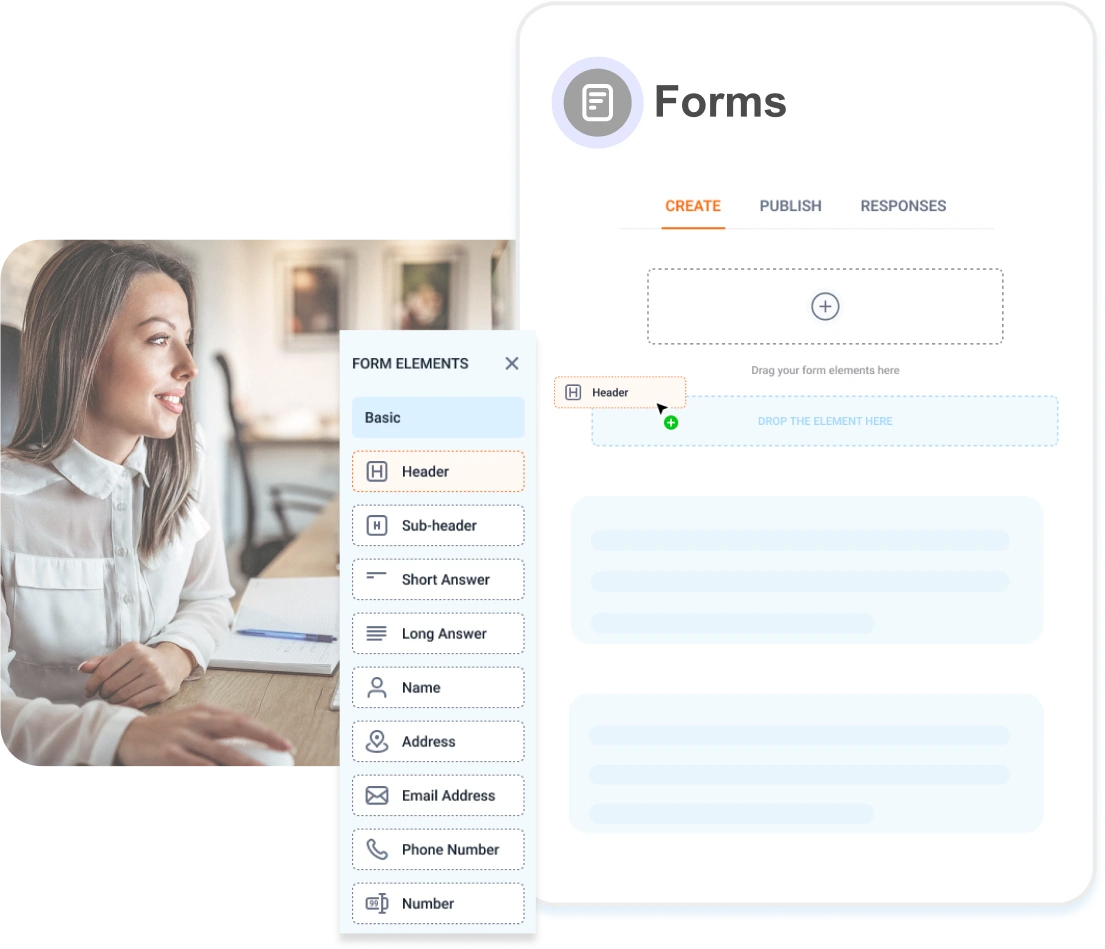
Forms can help you gather the right context before coaching begins without turning the first session into an administrative interview. Delenta supports forms as part of a connected coaching workflow.
Booking a coaching session should not feel like organising a committee meeting.
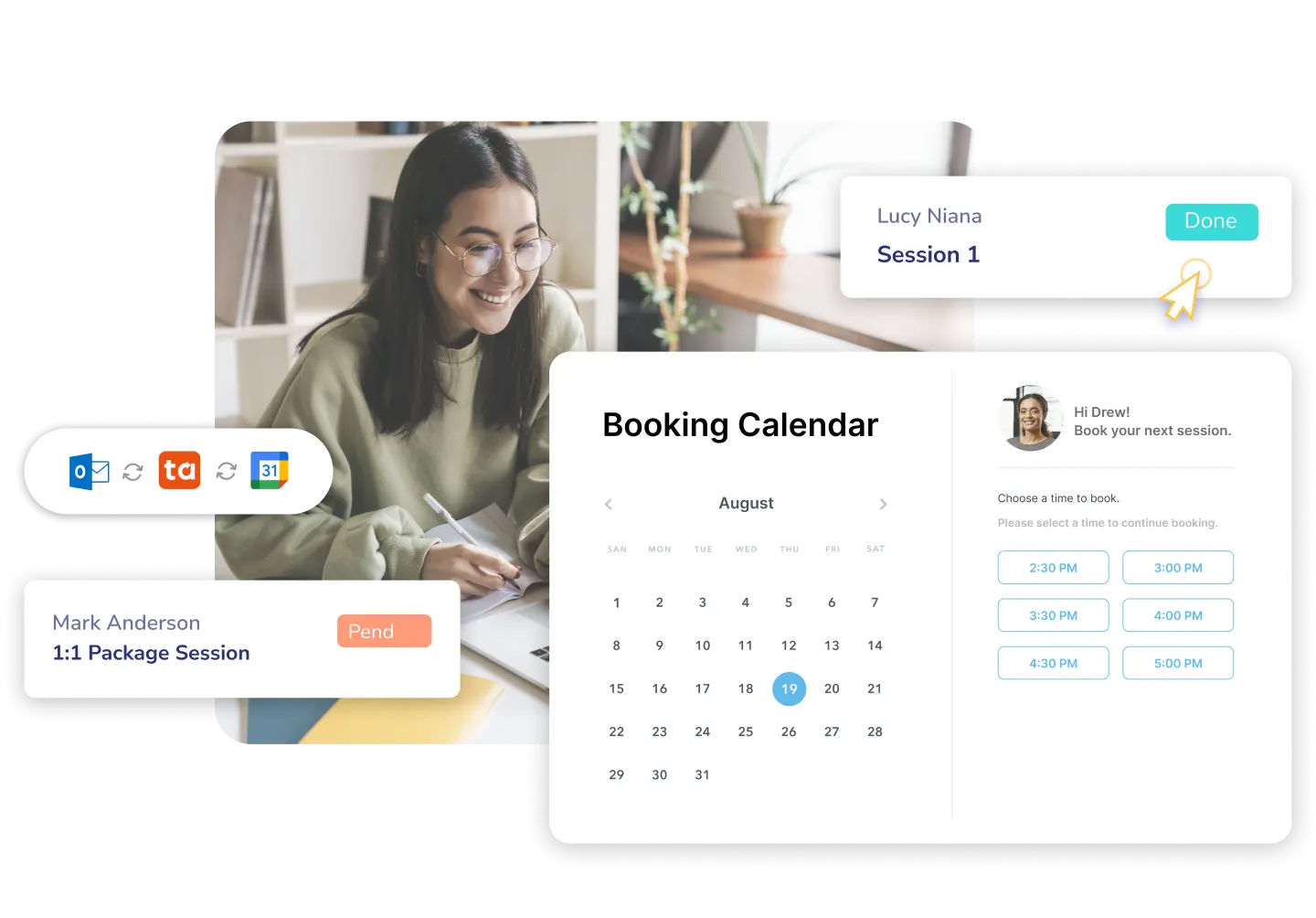
Clients increasingly value being able to see appropriate availability, choose a time, receive the correct meeting information and reschedule within the boundaries of the coaching agreement.
For the coach, a structured scheduling process also protects time. You control availability, buffers and session rules while reducing repetitive coordination.
Delenta’s coaching scheduling tools help connect booking, calendars and coaching sessions in one workflow.
Coaching relationships create a surprising amount of information: session details, forms, resources, goals, actions, payments and programme content.
If that information is scattered, the client experience becomes harder to navigate as the engagement continues.
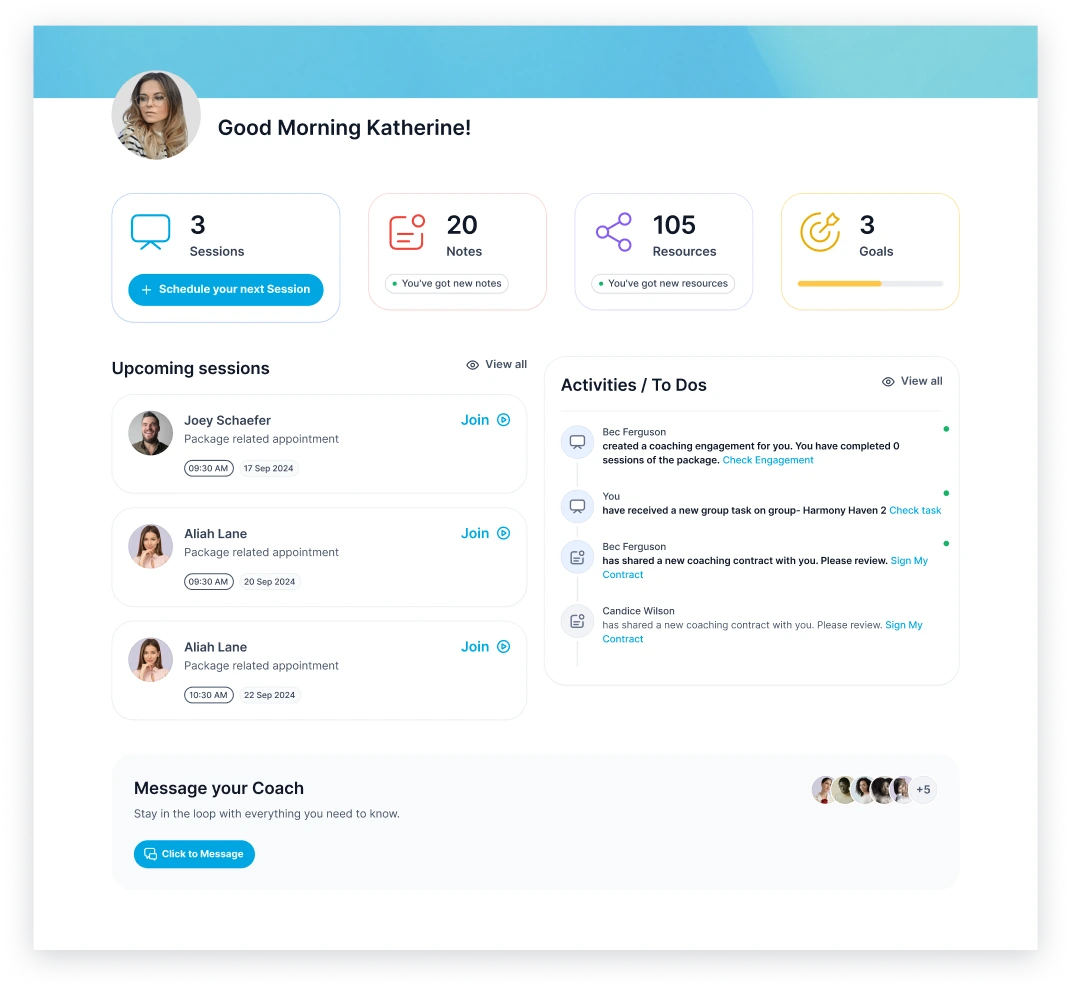
A dedicated client portal gives the relationship a home. Rather than asking “Where was that link?” or “Which email had the worksheet?”, clients have a consistent place to return to.
See Delenta’s client portal and how it can bring sessions, resources and other client-facing information together.
A coaching experience should not feel like a collection of isolated calls.
The conversation in one session should inform what happens next. A goal should still be visible a month later. An action agreed in one session should not disappear because both people became busy.
That does not mean coaches need to constantly message clients between sessions. It means the coaching journey should have continuity.
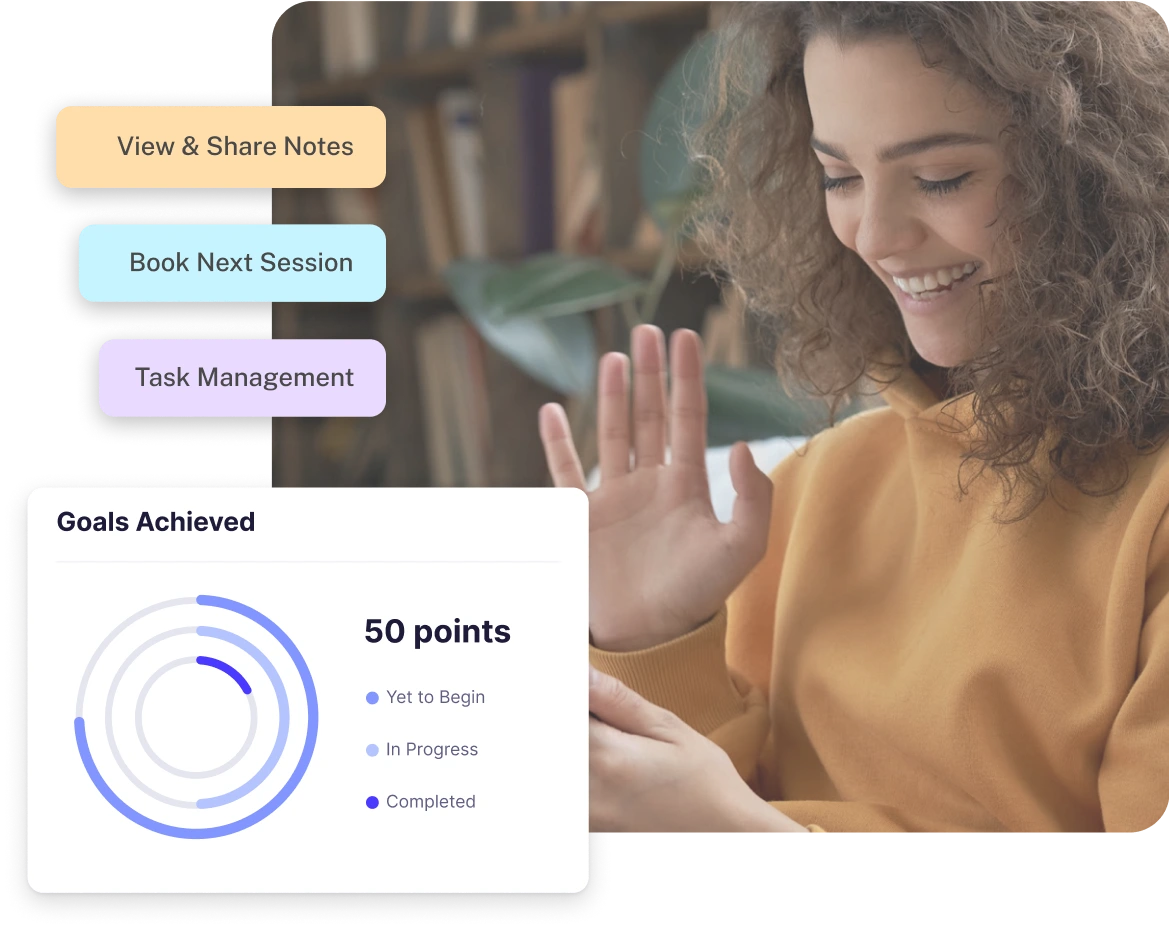
Notes, goals, tasks, resources and progress tracking can help both coach and client stay connected to the work over time.
This is especially useful for longer engagements, leadership programmes and coaching packages where the value is built across a sequence of conversations rather than one appointment.
Clients may value a good conversation, but over time they also want to understand what is changing.
Progress in coaching is not always a neat percentage. It can include clearer decisions, changed behaviours, stronger confidence, completed actions, new habits or progress toward a stated goal.
The role of a system is not to reduce coaching to a dashboard. It is to make the client’s goals and progress easier to revisit.
A simple practice is to return regularly to three questions:
Delenta supports goals and progress tracking so this context can stay connected to the wider coaching relationship.
Modern coaching can happen across one-to-one sessions, groups, programmes, courses and combinations of live and asynchronous work.
Flexibility is useful, but only when the client understands the structure.
If a programme includes six private sessions, a group session, resources and a course, make the pathway clear. If clients can reschedule, tell them how. If communication between sessions is included, explain where it should happen and what response expectations are.
Clear boundaries can make an experience feel more supportive because the client knows what is available and how to use it.
Convenience should never come at the expense of trust.
Coaching can involve personal information, private reflections and sensitive notes. Clients may not ask detailed questions about data handling, but they still expect the systems behind the coaching relationship to be used responsibly.
The ICF Code of Ethics addresses confidentiality, security and privacy of records, including the use of technology systems in coaching.
For coaches, this means thinking about where information is stored, who can access it, how it is shared and whether a new tool genuinely belongs in the client journey.
Clients are not hiring you because you have the most software. They are hiring you for the coaching experience and the outcome they want to work toward.
Technology should make the relationship easier to navigate without constantly drawing attention to itself.
A useful test is simple: does this tool remove effort for the client, or does it create another login, another place to check or another process to learn?
The modern experience is not the one with the most technology. It is the one with the least unnecessary friction.
Imagine a client joining a six-month leadership coaching programme.
Before the first session, they receive clear information about the programme, complete an intake form and book their session. Their resources and upcoming sessions are available in one place.
After each session, the coach updates relevant notes, goals and agreed actions. The client can return to resources without searching through old emails. Before the next session, both people have the context they need.
At key points in the programme, they review progress and decide whether the focus needs to change.
None of this replaces the quality of the coaching conversation. It makes the conversation easier to build on.
Walk through your own process as if you were a new client and ask:
The answers will show you where your client experience is creating confidence and where it may be creating friction.
Delenta brings the operational parts of coaching into one platform: client management, scheduling, notes, goals, forms, resources, packages, payments, video meetings, client portals and more.
For clients, that can mean fewer disconnected steps. For coaches, it can mean less time maintaining the experience manually.
The goal is not to make coaching feel automated. It is to make the administration around coaching feel organised enough that the human relationship can stay central.
What clients expect from a modern coaching experience is not complicated.
They want clarity before they start, simple logistics, easy access to information, continuity between sessions, visible progress and confidence that their information is handled responsibly.
Most importantly, they still want to feel known by the person coaching them.
Technology can support all of that. It should never make the client wonder where the human went.
It is a coaching experience where the human relationship is supported by clear onboarding, simple scheduling, accessible information, continuity between sessions and responsible use of technology.
Not every client will ask for one by name, but a central place for sessions, resources, goals and relevant information can reduce friction and make the coaching journey easier to navigate.
Use technology for logistics, information access, reminders, records and progress visibility. Keep empathy, judgement, feedback and the coaching conversation human.
Depending on the offer, onboarding may include programme expectations, an agreement, payment, an intake form, portal access and first-session scheduling.
Keep goals, actions and relevant notes connected to the engagement, then review them periodically with the client instead of waiting until the final session.
Want to create a clearer, more connected coaching experience? Start a free trial of Delenta and bring more of the client journey into one place.
Choosing a CRM for your coaching business isn't just about managing a contact list; it’s about powering your client’s transformation. While a general CRM focuses on the "Sale," a specialized coaching CRM focuses on the Client Lifecycle, from the first discovery call to the final session and beyond.
The coaching industry is experiencing explosive growth, projected to reach $5.8 billion by 2026 . However, many coaches struggle with administrative overhead, losing an average of 1.25 hours daily on manual tasks like scheduling and invoicing . This guide breaks down the 10 leading platforms to help you decide which engine will power your practice's growth.
Key Takeaways:
A specialized coaching CRM should offer four core pillars: integrated scheduling, automated client onboarding, a secure client portal for resource sharing, and seamless payment processing (Stripe/PayPal). Unlike generic CRMs, coaching-specific tools prioritize the 'coaching journey' over simple sales pipelines