You don't need a team of five people to run a professional coaching business. You don't need an assistant answering every email, and you don't need a complicated technology stack.
What clients usually experience as “professional” is simpler: things are clear, things happen when expected, information is easy to find, communication feels considered, and the coach is present.

Clients experience professionalism through the whole relationship. They notice how easy it is to book a call, whether onboarding feels organized, whether sessions start on time, whether their goals are remembered and whether resources and payments are easy to manage.
Your prospective client should never have to wonder, “How do I actually get started?” Give them one clear action such as booking a discovery call, applying for coaching or scheduling a chemistry session.
Let prospects see your availability and choose a suitable time within the boundaries you define.
Explore Delenta's coaching scheduling tools
Create a standard sequence such as Welcome → Agreement → Payment → Intake → Portal access → First session. Create the structure once, then reuse it.
When clients need their next session, a worksheet, a goal or a resource, searching through email creates friction.
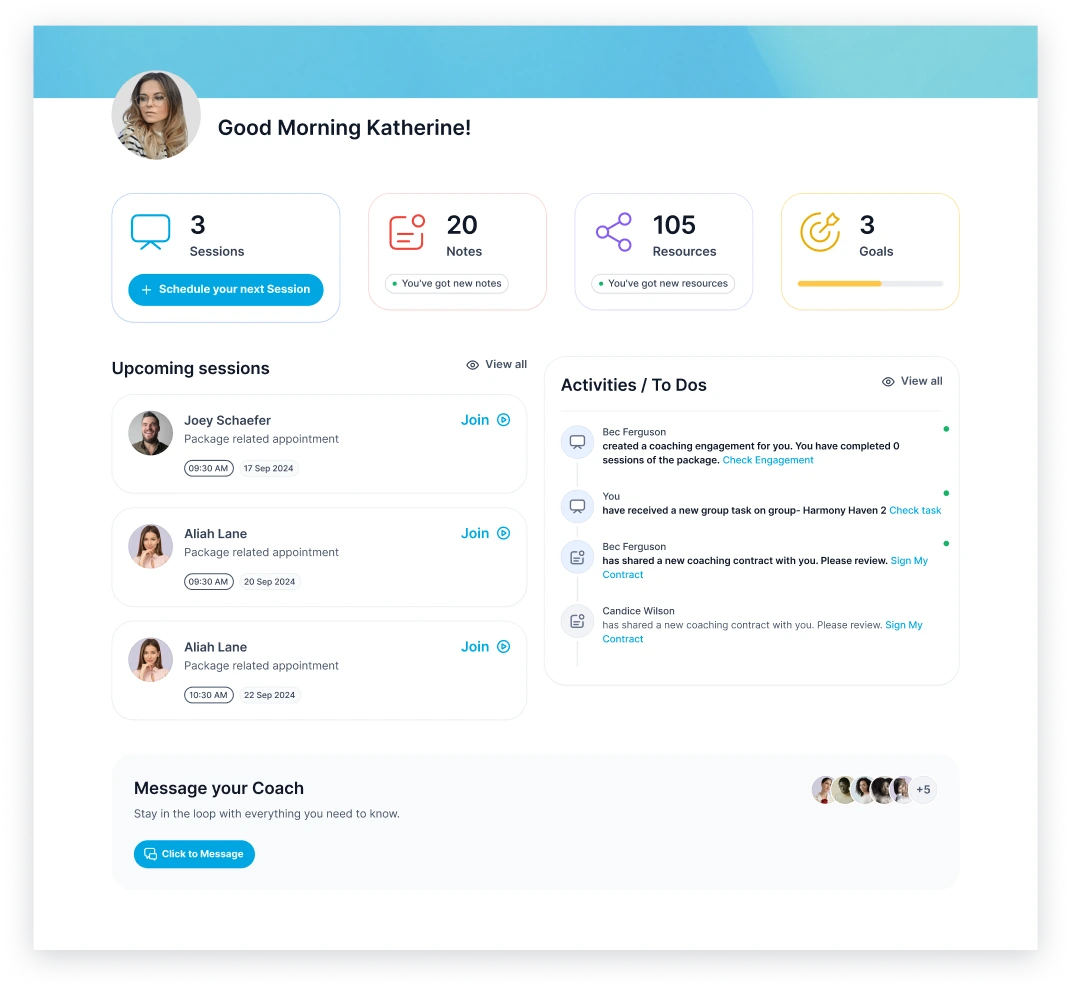
A client portal gives the relationship a home. Delenta's portal provides a central space for sessions, notes, resources, tasks and goals.
Solo does not have to mean generic. Your coaching business can have its own branding and client-facing experience. Delenta supports branding and themes across client-facing experiences.
Automate repetitive logistics such as booking confirmations and reminders, but keep important communication sounding like you. The system should handle logistics; you should provide the relationship.
A professional coaching experience should not feel like a series of conversations that disappear after each call. Connect sessions to goals, actions, milestones and progress reviews.
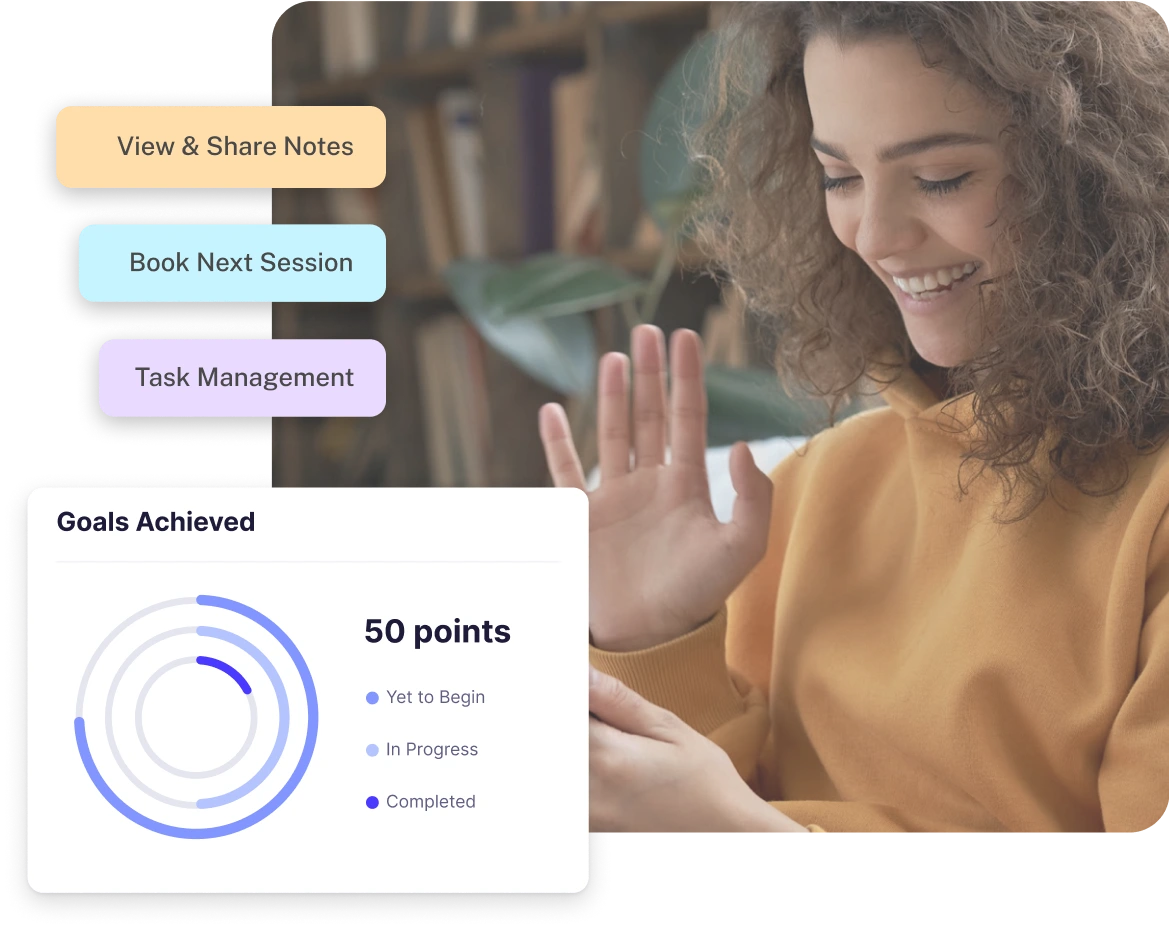
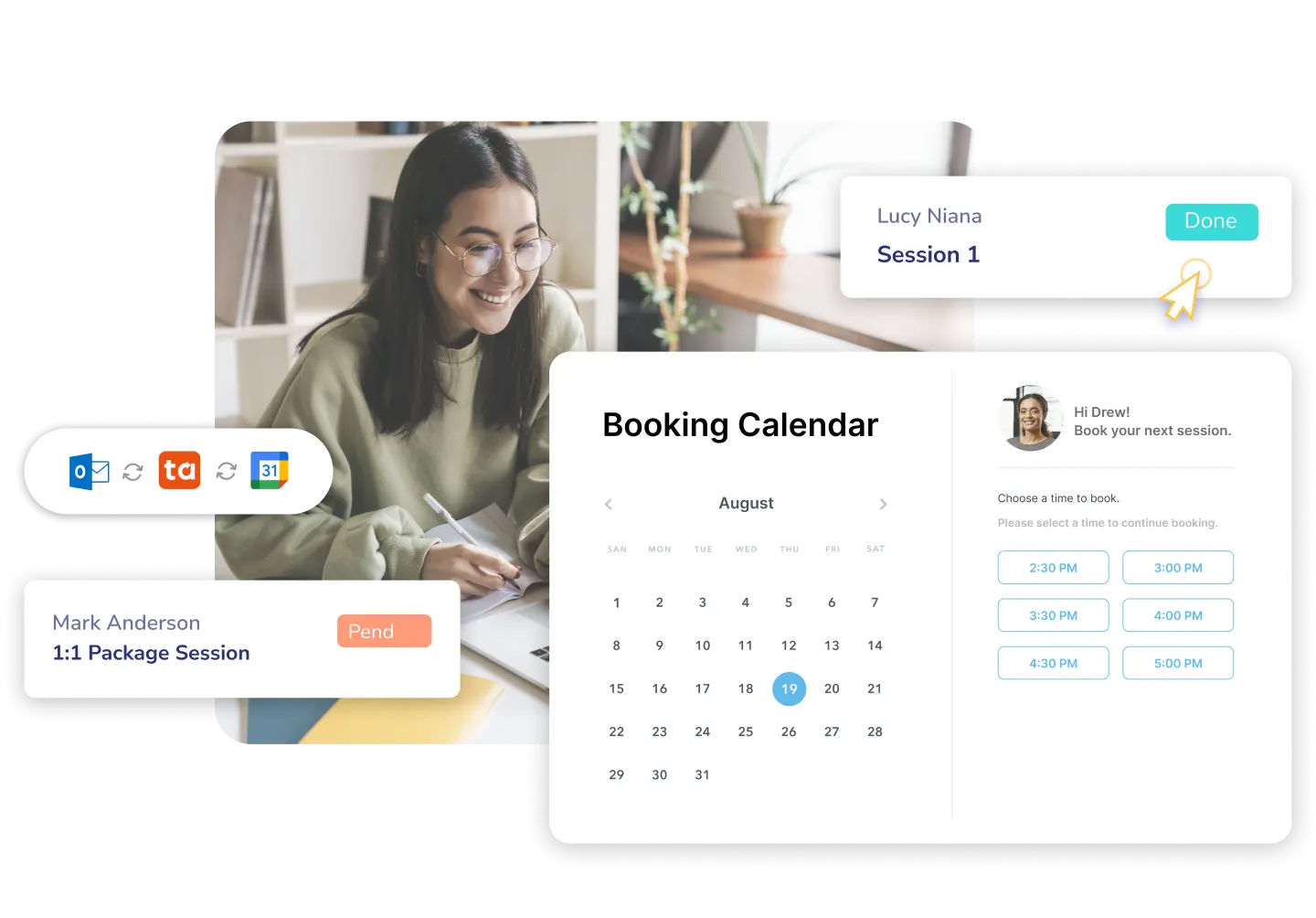
Your calendar is part of your client experience. Self-scheduling, reminders and calendar synchronization become increasingly valuable as your client base grows.
Explore coaching scheduling with Delenta
A solo coach does not need enterprise-level complexity. The goal is a simple operation that reliably delivers a great client experience.
Professionalism also includes responsibility. Coaching records can contain personal information, so understand how information is stored, who can access it, how it is shared and what professional or legal obligations apply.
The ICF Code of Ethics addresses confidentiality, security and privacy of records, including technology-assisted coaching tools.
There is one thing larger businesses often struggle to recreate: personal attention. Technology should protect that advantage by taking repetitive work off your plate, not by making you behave like a large corporation.

Delenta brings client management, scheduling, client portals, notes, goals, tasks and sessions into one platform.
You don't need a bigger team to look professional. You need a better experience: a clear first step, easy onboarding, accessible information, human communication, visible progress and less repetitive administration.
Focus on consistency across booking, onboarding, communication, information access and progress.
Not necessarily from day one. It becomes more valuable as clients, sessions and administrative work increase.
Automate repetitive logistics while keeping important conversations and coaching interactions personal.
Depending on the model, it may include an agreement, payment, intake information, expectations, goals, portal access and first-session scheduling.
Want to give clients a more professional experience without adding more admin? Explore Delenta and see how you can bring your coaching workflow into one place.
Choosing a CRM for your coaching business isn't just about managing a contact list; it’s about powering your client’s transformation. While a general CRM focuses on the "Sale," a specialized coaching CRM focuses on the Client Lifecycle, from the first discovery call to the final session and beyond.
The coaching industry is experiencing explosive growth, projected to reach $5.8 billion by 2026 . However, many coaches struggle with administrative overhead, losing an average of 1.25 hours daily on manual tasks like scheduling and invoicing . This guide breaks down the 10 leading platforms to help you decide which engine will power your practice's growth.
Key Takeaways:
A specialized coaching CRM should offer four core pillars: integrated scheduling, automated client onboarding, a secure client portal for resource sharing, and seamless payment processing (Stripe/PayPal). Unlike generic CRMs, coaching-specific tools prioritize the 'coaching journey' over simple sales pipelines