An enterprise-ready coaching platform is more than coaching software with a bigger user limit. It needs to support security, governance, multiple coaches, complex programmes, reporting, integrations and procurement requirements without making the coaching experience feel corporate or fragmented.
That difference matters when a coaching firm moves from individual clients into large employer programmes, associate-coach networks, public-sector contracts or global rollouts. The platform is no longer just helping one coach stay organised. It becomes part of the organisation's delivery infrastructure.
So what should you actually look for when evaluating an enterprise coaching platform?
Enterprise-ready coaching software can support the operational, security and reporting requirements of larger coaching programmes while preserving the confidentiality and quality of the coaching relationship.
In practice, that means the platform should be able to answer questions from several different stakeholders at once:
If a platform solves only the first question, it may be excellent software for an individual coach but still not be ready for enterprise delivery.
For enterprise buyers, security is not a feature buried near the bottom of a pricing page. It is often a gate that determines whether the commercial conversation can continue.
Look for evidence of a formal security programme, relevant compliance frameworks, encryption, access controls, documented policies, auditability and a clear process for security reviews.
Delenta's Security Trust Center currently lists ISO 27001, GDPR and HIPAA compliance, alongside security policies and procurement documentation. For organisations working with health information, Delenta also supports HIPAA enablement and Business Associate Agreements where applicable.
The specific standards you need will depend on the client, region, data and contract. The broader point is that an enterprise platform should be prepared to show its security posture, not simply claim that it is secure.
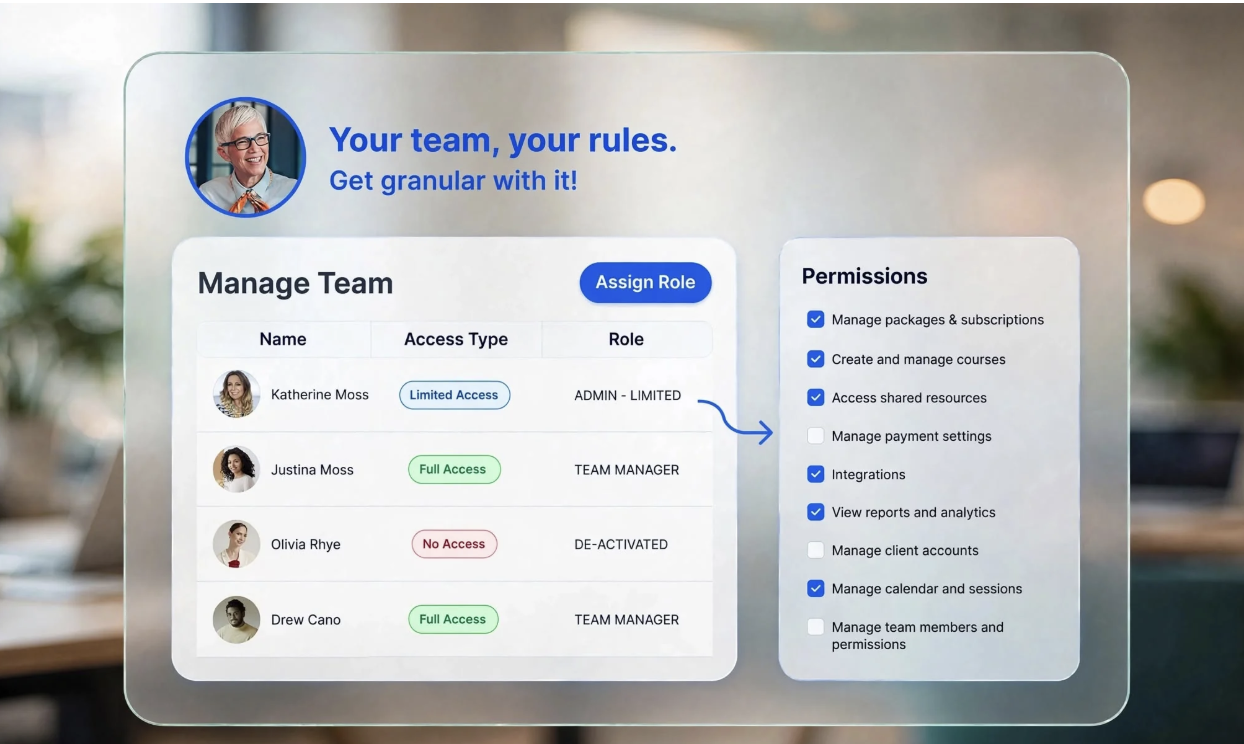
As a coaching organisation grows, “admin” and “coach” are rarely enough.
You may have super admins, programme managers, finance staff, internal coaches, external associate coaches, report-only users and people who need access to one function but not another.
Enterprise-ready software should let you apply the principle of least privilege: people should be able to access what they need for their role without automatically seeing everything in the system.
Delenta Teams supports multi-coach management and role-based access. Current team controls include configurable roles and permissions, allowing organisations to create access profiles for different operational needs.

A platform becomes genuinely valuable at enterprise level when it reduces the coordination work created by scale.
Look for capabilities such as:
Without these controls, the “platform” often becomes a front end sitting on top of spreadsheets, email chains and manual coordination.
If that sounds familiar, see the signs your coaching business has outgrown spreadsheets.
Enterprise coaching buyers usually want more than a list of completed sessions. They need an appropriate view of programme performance.
A strong reporting layer can help answer:
Delenta's HR Dashboard and Insights & Reports capabilities are designed to support programme-level visibility, including coaching activity, engagement and reporting for organisational stakeholders.
The important word is appropriate. Enterprise reporting should increase visibility without turning confidential coaching content into management surveillance.
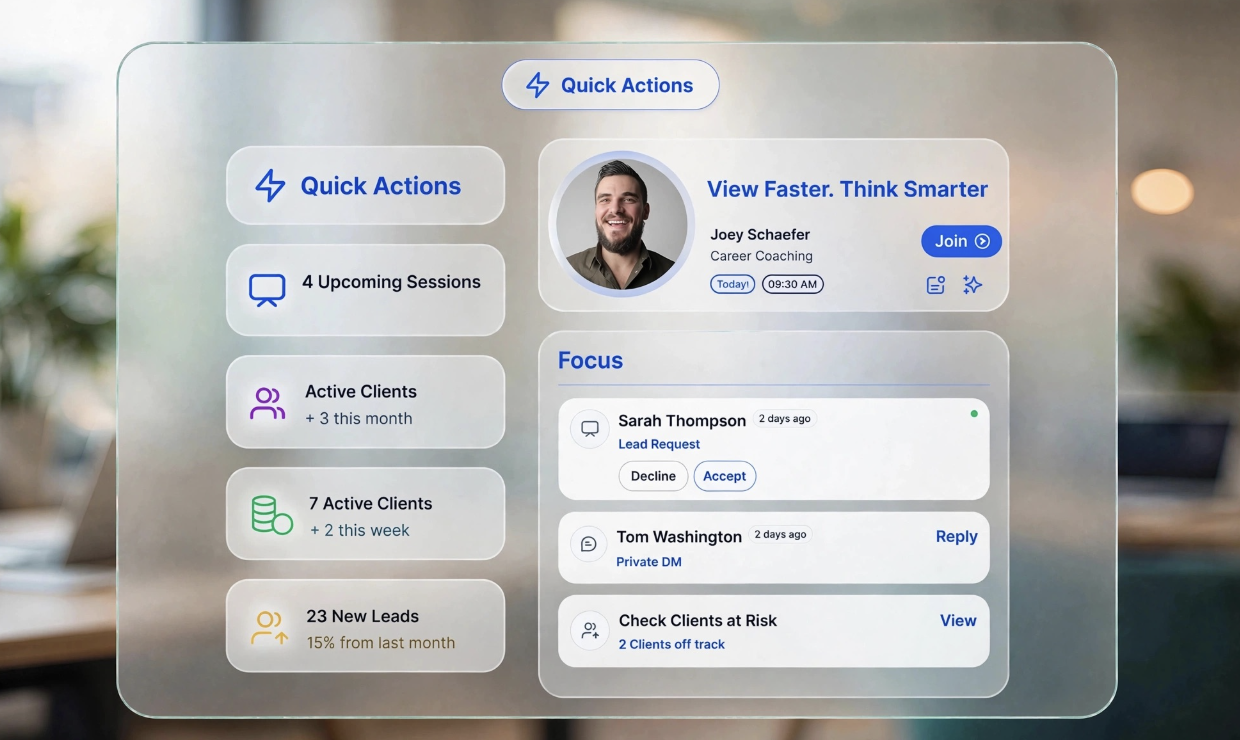
Enterprise coaching creates multiple stakeholders, which makes information boundaries more important, not less.
The platform should support the agreement between client, coach and sponsor by separating private coaching information from programme-level reporting and limiting access based on role.
Before selecting a platform, ask:
For a practical framework for connecting coaching outcomes to credible business evidence without overreaching on what can be claimed or shared, see Delenta's SHADOW Coaching Intelligence guide.
Large organisations already have a technology environment. Enterprise coaching software has to fit into it.
At minimum, evaluate calendar and video-conferencing integrations, identity and access requirements, data export, payment or finance workflows where relevant, and how information can move between systems.
For more complex deployments, API access and single sign-on can become important requirements. Delenta's current Enterprise offering includes public API and SSO support, while the broader platform integrates with common coaching workflows such as calendars, video meetings and payments.
The goal is not to integrate with everything. It is to avoid creating a new data island that the organisation has to maintain manually.
Enterprise buyers often have specific onboarding, contracting, matching, reporting and approval processes. A platform should be flexible enough to support those workflows without requiring a development project for every programme.
Look for configurable:
There is a useful balance here. Too little flexibility forces workarounds. Too much “customisation” can turn a coaching operation into a software implementation programme.
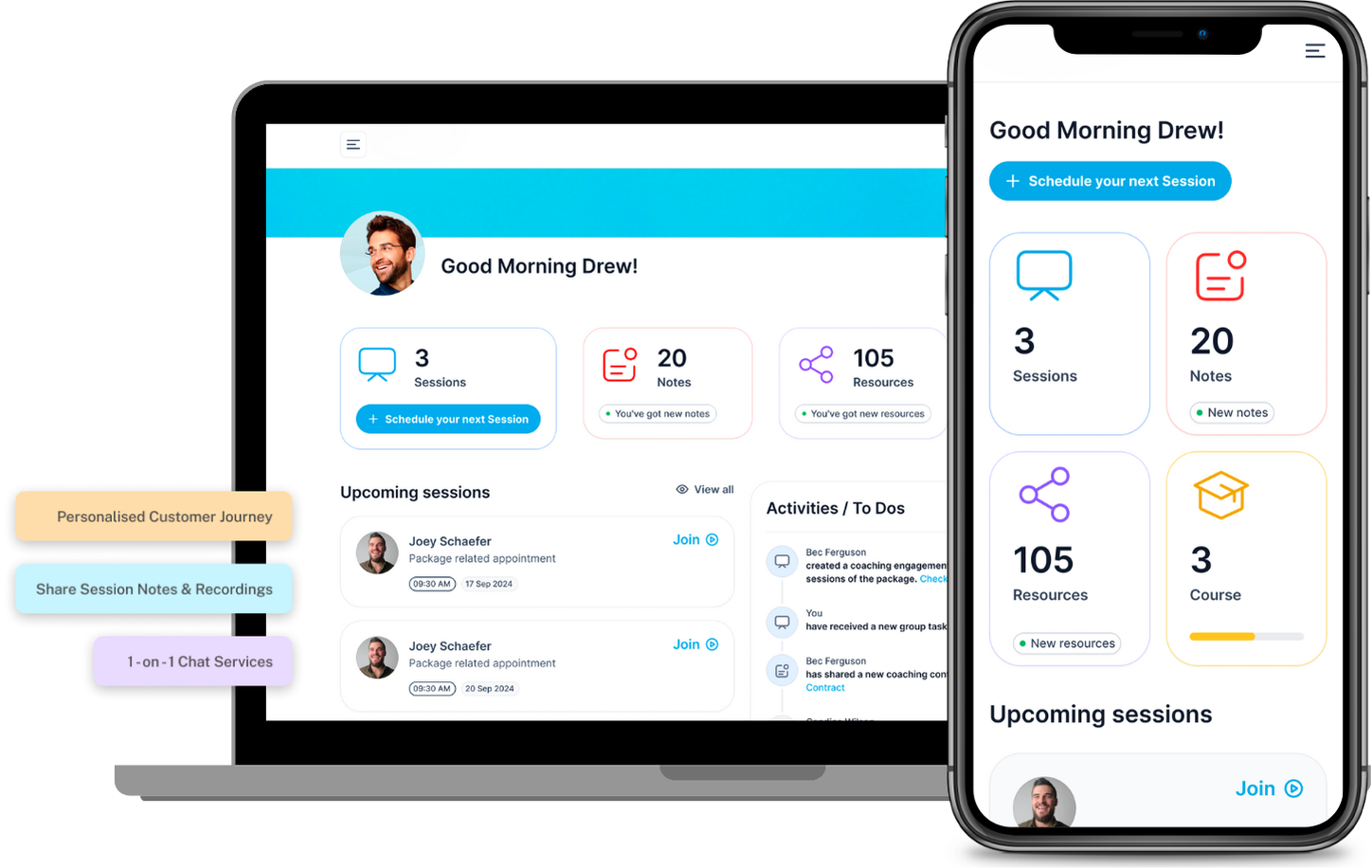
Enterprise readiness should not mean an enterprise-looking client experience.
Participants still need a simple place to understand what happens next, book sessions, access resources, see tasks or goals and engage with the coaching journey.
A dedicated coaching client portal can give participants a consistent home for their engagement while the organisation manages the operational complexity behind the scenes.
The same principle applies to coaching firms themselves: white-label and custom-branding options can help the experience feel like part of the provider's service rather than a disconnected third-party tool.
AI is becoming part of the coaching technology stack, but enterprise buyers will increasingly ask not only what the AI can do, but how it is governed.
Useful questions include:
Delenta provides central controls for AI features within team accounts, and its AI in Coaching and Delenta-i pages outline its coaching-focused AI direction.
For the ethical side, Delenta's AI Ethics in Coaching resource explores the governance questions coaching organisations should consider.
Software is only enterprise-ready if people can actually adopt it.
Ask what happens after the contract is signed:
A technically capable platform can still fail if implementation is treated as the customer's problem. Delenta's Teams and Enterprise offering includes migration, onboarding and coach-training support, with dedicated account and customer-success support listed for enterprise deployments.
These are not the same thing.
A tool can support hundreds of user accounts and still lack the governance, reporting, security evidence or operational controls required by an enterprise buyer.
A more useful evaluation asks whether the platform is ready across five dimensions:
Before shortlisting a vendor, ask for evidence against these questions.
For teams actively responding to corporate or public-sector opportunities, Delenta's RFP Readiness Kit provides a practical way to review the compliance, reporting and technology questions that commonly appear in procurement.
Delenta is built as a coaching operations platform for professional coaches and coaching organisations. Its Teams and Enterprise capabilities bring together coach management, client management, scheduling, programmes, permissions, reporting, payments and client experience in one system.
That matters because enterprise coaching is rarely limited by the coaching itself. The friction appears around the coaching: allocation, coordination, governance, reporting, security, billing and proving value.
A platform becomes enterprise-ready when it can handle those layers without pulling the coach away from the relationship at the centre of the work.
The best enterprise coaching platform is not the one with the longest feature list.
It is the one that can pass procurement, protect sensitive information, coordinate complex delivery, give sponsors appropriate evidence, integrate with the wider organisation and still feel simple to coaches and clients.
Enterprise readiness is the combination of scale, control, evidence and trust.
An enterprise coaching platform is software designed to manage coaching programmes across multiple coaches, clients, teams or organisational accounts, with stronger requirements for security, permissions, reporting, integrations and governance.
Core capabilities include multi-coach management, configurable roles and permissions, programme-level reporting, secure client management, integrations, workflow configuration, sponsor reporting and implementation support. API and SSO may also be important for larger deployments.
A coaching CRM primarily organises client relationships and delivery. Enterprise coaching software also needs to coordinate multiple coaches and organisational accounts while supporting governance, security, analytics, reporting and procurement requirements.
Different users need different levels of access. Granular permissions help administrators give coaches, finance staff, report viewers and programme managers only the information and controls required for their role.
Not every deployment needs them, but larger organisations often request SSO for identity management and API access for system integration or data workflows. They are useful enterprise-readiness indicators.
Look beyond marketing claims. Review current compliance frameworks, security policies, encryption, access controls, auditability, data-processing terms and the vendor's ability to provide evidence during procurement.
Evaluating software for a multi-coach or enterprise programme? Explore Delenta Teams, review the Delenta Trust Center, or book a demo to discuss your delivery and procurement requirements.
Choosing a CRM for your coaching business isn't just about managing a contact list; it’s about powering your client’s transformation. While a general CRM focuses on the "Sale," a specialized coaching CRM focuses on the Client Lifecycle, from the first discovery call to the final session and beyond.
The coaching industry is experiencing explosive growth, projected to reach $5.8 billion by 2026 . However, many coaches struggle with administrative overhead, losing an average of 1.25 hours daily on manual tasks like scheduling and invoicing . This guide breaks down the 10 leading platforms to help you decide which engine will power your practice's growth.
Key Takeaways:
A specialized coaching CRM should offer four core pillars: integrated scheduling, automated client onboarding, a secure client portal for resource sharing, and seamless payment processing (Stripe/PayPal). Unlike generic CRMs, coaching-specific tools prioritize the 'coaching journey' over simple sales pipelines